Dock operations
Dock Scheduling Optimization for Logistics Facilities
AI dock scheduling reduces gate congestion, improves appointment compliance, and protects labor plans.
3PL logistics leaders in Indianapolis and across Indiana are under pressure to raise throughput without adding headcount. A focused dock scheduling optimization plan helps protect SLAs, reduce overtime, and keep clients happy.
Most 3PLs already capture data in WMS, TMS, labor, and yard systems. The gap is turning that data into simple daily actions that teams can follow without disrupting operations.
This guide shows how Sowynet builds AI software services that improve dock scheduling optimization with dashboards, alerts, and workflow automation.
Key takeaways
Build a focused plan that improves throughput and keeps client SLAs on track.
- Focus the bottleneck. Use the dock scheduling optimization baseline to identify the slowest step.
- Apply AI signals. Prioritize tasks and staffing decisions with real-time alerts.
- Prove the ROI. Track KPIs that clients and finance leaders trust.
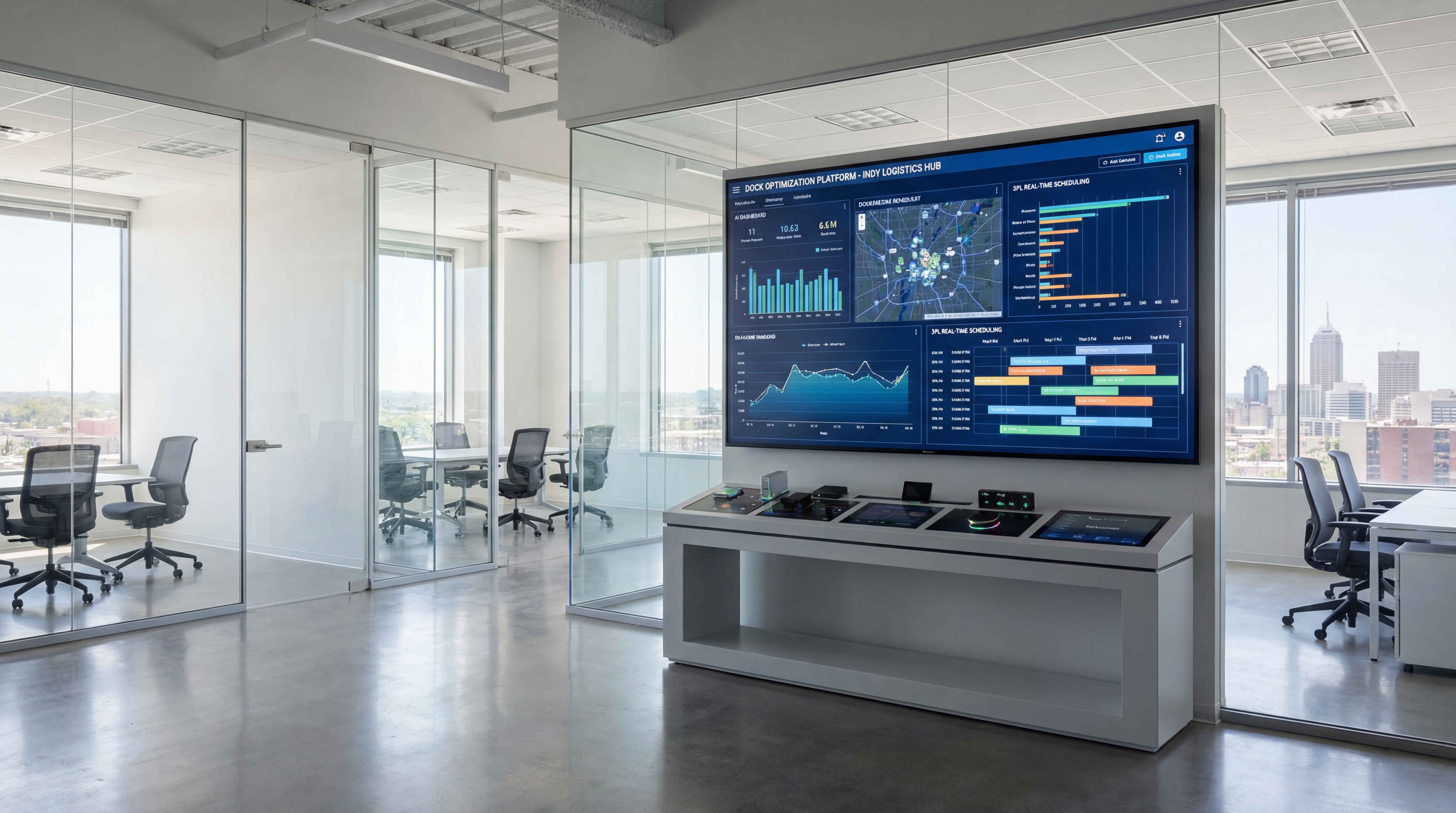
Why dock scheduling optimization matters for 3PL operations
A clear baseline keeps teams aligned on what to fix first and where productivity leaks. Small delays compound across clients, shifts, and dock schedules.
Use this section to align supervisors, IT, and client stakeholders around the same metrics.
- Late carrier arrivals disrupt dock plans.
- Gate congestion slows inbound flow.
- Dock workload is unbalanced across shifts.
- Labor plans change after carriers reschedule.
Where AI improves dock scheduling optimization
AI does not replace the WMS. It layers smarter decisions on top of current systems so leaders can move faster without disrupting operations.
- Arrival time prediction for better staffing.
- Auto-assign doors by load type and priority.
- Dynamic rescheduling when delays occur.
- Dock utilization heatmaps for planning.
Pair this playbook with Yard Management Visibility with AI Gate and Trailer Tracking, 3PL Labor Management: AI Scheduling to Cut Overtime, and Cross-Docking Efficiency: AI for Faster Transfers in 3PL Hubs for a full 3PL productivity roadmap.
Data and integrations to connect
The fastest wins come when WMS, labor, and transportation data connect into one view. Sowynet builds the integrations so teams get insights without manual exports.
- Carrier appointment data and ETAs.
- Yard management and gate logs.
- WMS inbound receipts and ASN data.
- Labor schedules and shift coverage.
See what we offer or recent projects for examples of our software delivery.
Playbook: dock scheduling optimization improvement roadmap
Use this phased plan to protect SLAs while you improve the workflow.
- Define dock KPIs and appointment rules by client.
- Integrate carrier data with dock schedules.
- Create priority rules for high-risk loads.
- Deploy AI predictions for arrival variability.
- Train dock leads on dynamic rescheduling.
- Review weekly with carriers and operations.
If you want this done-for-you, our team can lead the audit, build the dashboards, and coach supervisors through the rollout.

KPIs to prove productivity gains
Leadership needs proof. Track KPIs that connect productivity to client outcomes and labor cost.
- Dock turn time and appointment compliance.
- Gate queue time and detention risk.
- Labor idle time during dock shifts.
- Unload time variance by carrier.

Common mistakes that stall results
Most delays come from small oversights. Avoid these traps to keep momentum.
- Manual reschedules without visibility.
- No carrier scorecards or feedback loop.
- Ignoring unload time variability.
- No standard work at the dock.
How Sowynet supports logistics teams
Sowynet builds AI dashboards, integrations, and workflow automation that improve productivity without disrupting operations. We work with logistics teams across Indiana and deliver clear documentation, training, and ongoing support.
Ready to talk? Schedule a meeting and we will map a custom plan for your sites.
Indiana implementation checklist for Dock Scheduling Optimization
For 3PL and warehouse leaders in Indianapolis and across Indiana, Dock Scheduling Optimization works best when you map the shift-level workflow before touching configuration. Start with inbound schedules, pick waves, dock turn times, and exception types by client so supervisors can see where productivity leaks begin.
Capture baseline KPIs like picks per hour, dock-to-stock time, travel distance per pick, and rework volume. These baselines make AI dashboards credible and keep client SLAs and penalty windows visible during daily huddles.
Sowynet typically pairs WMS exports with labor standards, scanner logs, and appointment data so operations leaders get one trusted view. That makes it easy to pilot a single zone before scaling to every site.
- Document client-specific order profiles, cutoffs, and wave logic.
- Normalize location master data, slotting rules, and handling units.
- Map exception codes to clear owners and escalation windows.
- Align labor standards with travel paths and safety rules.
- Define data refresh timing so dashboards stay trusted.
- Share a one-page supervisor playbook for daily use.
See what we offer and recent projects for examples of logistics dashboards we deliver.
How to prove ROI from Dock Scheduling Optimization
Leadership wants proof that productivity gains will outlast the pilot. Build a simple ROI model that connects labor hours saved, reduced overtime, and fewer SLA penalties to the cost of dashboards and automation.
Track metrics weekly and share them with client-facing teams so the story is consistent. When the data shows fewer exceptions and faster dock turns, renewals become easier.
- Labor cost per order by client and shift.
- Lines picked per hour and travel distance per pick.
- Exception aging and repeat incident rate.
- On-time shipment percentage by dock window.
- Overtime hours and staffing gaps by day.
- Client scorecard trends tied to SLA penalties.
If you want a finance-ready model, Sowynet can build the dashboards, alerts, and reports so ROI is visible in the first 60 days.
Ready to improve dock scheduling optimization?
We handle audits, integrations, and AI dashboards that help 3PL leaders move faster with confidence.
Book a logistics AI reviewDecision criteria for Dock Scheduling Optimization projects
Operations leaders in Indiana typically evaluate Dock Scheduling Optimization solutions on three factors: integration depth, adoption speed, and measurable outcomes. The best results happen when WMS data, labor standards, and appointment schedules are aligned in one operational view.
When comparing providers or internal builds, ask how quickly supervisors can act on alerts, how KPIs tie back to client SLAs, and whether the data refresh cadence matches the rhythm of the dock.
- How fast can we integrate WMS exports and labor data?
- Will supervisors see alerts in minutes, not hours?
- Can we audit results by client, shift, and zone?
- Do dashboards map directly to SLA penalties?
- Is there a clear training and change plan?
- How will we measure ROI in the first 60 days?
These questions help logistics teams prioritize the right rollout and avoid tools that stall after launch.
Sowynet delivery approach for Dock Scheduling Optimization
We start with a short discovery sprint to document workflows, data sources, and KPI targets. From there, we map WMS exports, labor standards, and appointment data into a clean reporting model.
Once the data is ready, we build dashboards and alert rules, then train supervisors on the daily playbook. The final step is a 30-60-90 review cycle to confirm the gains stick.
- Discovery workshops with ops, IT, and client leads.
- Data mapping for WMS, labor, and dock schedules.
- Dashboard build with KPI definitions and owners.
- Pilot zone launch with supervisor coaching.
- Scale to all shifts with ongoing KPI reviews.
If you want a done-for-you rollout, schedule a logistics planning call.
Frequently asked questions
Common logistics questions
Share these with operations leaders to speed approvals.
Can we optimize without a new dock system?
Yes. We start with data integration and automated rules on top of current tools.
Will this reduce detention costs?
Better scheduling and visibility can cut detention and demurrage fees.
How do carriers participate?
We provide simple appointment and scorecard views they can access.
Quick summary
Dock Scheduling Optimization at a glance
A short summary you can share with leadership to explain the value.
- Smarter arrivals Predict delays before they hit the dock.
- Better balance Distribute load across doors and shifts.
- Lower cost Reduce detention and idle labor.
Use this summary to give your team quick context.
Pain - Fix - Result Framework
From dock congestion to controlled appointment flow
Pain: Facilities lose labor and dock capacity when appointments bunch together, arrivals drift, and nobody sees the next bottleneck early enough.
Fix: We align dock rules, labor timing, and yard visibility so appointments are sequenced around real capacity instead of guesswork.
Result: Better door utilization, fewer detention surprises, and more stable outbound performance across the week.
Next step
Apply this topic with a dock scheduling plan
If this article matches what you need, start with the appointment rules, carrier windows, and door constraints that create the most congestion.
Then connect dock scheduling to labor planning, yard visibility, and exception handling so the schedule reflects real operating conditions.
That gives your team a workflow it can actually run under pressure.
View the related service pageRelated reading
Explore related guides and service pages
These links expand the topic and help readers compare practical next steps.
Loading related resources...
Loading recent posts...