Website support
Website Content Updates for Small Business: Keep Service Pages, Hours, and Offers Ready to Convert
A practical website support guide for owners who need their site to stay current after launch, not slowly drift out of sync with what the business actually sells.
website content updates for small business matter because many owners launch a strong site once, then let service pages, business hours, offers, and contact details drift until buyers start seeing mixed signals.
Pain: local search may still send traffic, but the page the visitor lands on no longer matches the offer, the Google Business Profile link, or the next step the team wants them to take. Fix: review the high-intent pages, local details, and lead paths on a monthly rhythm. Result: the site stays easier to trust, easier to rank, and easier to convert.
This kind of upkeep supports website support, stronger SEO execution, and better coordination with Google Business Profile updates.
Key takeaways
The most valuable website updates are usually the simple ones that keep buyers from running into friction right before they contact you.
- Protect the money pages. Service pages, hours, offers, and contact routes should be checked before low-priority pages.
- Keep channels aligned. The website, Google Business Profile, and lead form should tell the same story.
- Use a monthly rhythm. Small fixes made on time are cheaper than rebuilding trust after drift stacks up.

Why website content updates for small business matter after launch
Many owners think the hard part is getting the site live. In practice, the harder part is keeping the most important pages accurate as the business changes. A new service is added. Hours change. A seasonal offer starts. One location begins focusing on a different lead type. The website often lags behind all of it.
That lag hurts in quiet ways first. Visitors ask the same questions. The page promise feels weaker than the search result. A Google Business Profile click lands on a page that looks stale. None of that feels dramatic on its own, but together it lowers trust right before the call or form fill.
This is why website content updates for small business are not only about looking active. They protect conversion. They also protect the value of the SEO work that brings people there in the first place.
Pain, fix, result: the simple maintenance story owners actually need
Pain: the site still gets visits, but the visitor sees old hours, a weak service summary, an expired offer, or a contact path that no longer fits the way the team works today.
Fix: review the pages that shape purchase intent first. Tighten service page copy, update hours and offers, confirm links from Google Business Profile, and test the full path from search result to thank-you screen.
Result: the site stops leaking trust. Better visitors stay engaged longer, ask fewer repeated questions, and reach the business through the path that is most likely to produce a real lead.
This is the maintenance logic many local businesses miss. They treat updates like random cleanup instead of a workflow tied to revenue.
What small businesses should update every month first
Not every page deserves equal attention. Start with the pages and details that shape buyer action. That usually means the home page, the main service pages, the contact or booking page, and any landing page linked from Google Business Profile or a recurring campaign.
Then review the details that create friction when they are wrong. Hours. service scope. offer language. service-area notes. pricing expectations when applicable. phone numbers. form routing. If those are weak, traffic quality drops even when rankings look stable.
- Main service pages with the highest local intent.
- Business hours, holiday changes, and location-specific notes.
- Offers, promos, or lead magnets that still appear in search or social.
- Internal links that route blog readers toward the right service page.
- Form, booking, and phone paths that should be tested from mobile.
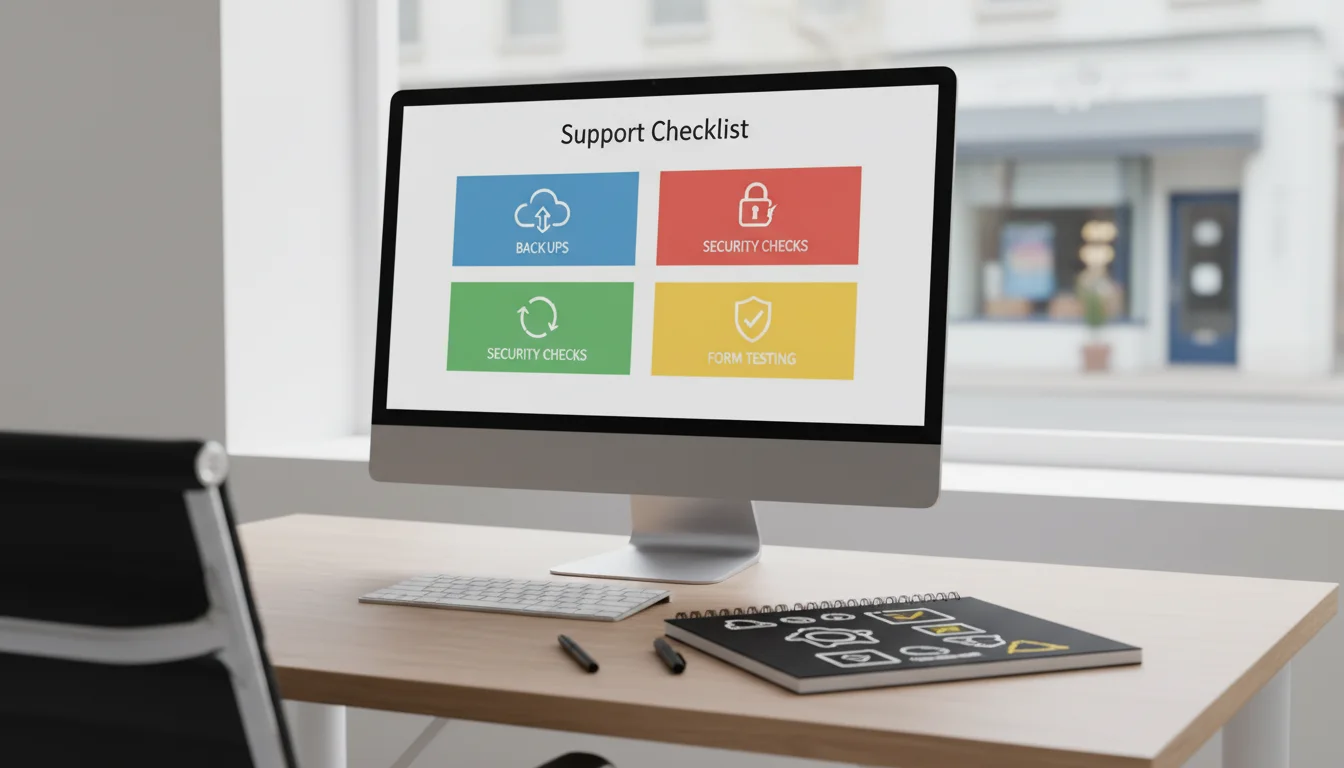
How service pages, business hours, and Google links drift apart
Most content drift is operational, not creative. The owner tells the front desk about a new offer. Someone updates Google Business Profile hours for a holiday. A social post goes out with a new CTA. But the service page still shows the older version of the offer, or the contact page still frames the next step in a different way.
That gap matters because local buyers compare details fast. If search says one thing and the landing page says another, the business looks less organized. The visitor may still contact you, but the trust level is already lower.
This is where update discipline becomes local SEO support. A cleaner landing page helps the listing work harder. A cleaner internal link path helps the service page earn more from supporting content. The channels should reinforce each other instead of drifting into separate systems.
Checklist: a monthly website content update workflow that does not waste time
Use a short checklist the team can actually repeat.
- Review the top three pages that drive calls, forms, or bookings.
- Confirm the current service wording still matches what the team wants to sell now.
- Check hours, location notes, and offer language against Google Business Profile and any active campaign.
- Test the primary CTA from mobile: call, form, booking, ordering, or directions.
- Update one proof element such as a recent project note, trust signal, or FAQ answer.
- Review internal links so blogs and support pages still route toward the right service page.
This checklist is simple on purpose. Most local businesses do not fail because they lack ideas. They fail because no one owns the routine long enough to keep the site trustworthy.
How monthly website updates help SEO and lead quality at the same time
Freshness alone is not the goal. The goal is alignment. Search engines and buyers both respond better when the page stays clear, current, and internally connected to the right service path.
When a service page stays accurate, internal links stay intentional, and the page linked from Google Business Profile still supports the same offer, local SEO work becomes easier to trust. That is also when lead quality tends to improve. The visitor knows what to expect before they contact you.
This topic overlaps naturally with service page design for conversion, local SEO reporting, and call tracking setup. Content updates help all three by keeping the landing pages honest.

What Sowynet handles in a website support workflow
Sowynet treats website content updates like operational support, not random edits. First we identify the pages that matter most for local demand. Then we check whether the offer, trust signals, local details, and CTA path still match what the business needs today.
From there, the work usually includes service page copy updates, business-hour changes, offer cleanup, internal-link adjustments, FAQ refreshes, and coordination with local SEO pages or Google Business Profile. That keeps the update work close to lead quality instead of turning it into generic “content maintenance.”
For restaurant and local-service clients, this matters even more because menus, offers, seasonal changes, and staffing realities move faster than the site usually does unless someone owns the support rhythm.
Local example: what this looks like in Indianapolis and nearby markets
An Indianapolis service company may change what it wants to promote based on season, staffing, or travel range. A Carmel location may need cleaner trust language and more current local proof because buyers compare several providers before they call. A restaurant may need menu, order, or hours changes reflected across the site before a busy weekend starts.
The update workflow should reflect those realities. It is not about publishing for the sake of publishing. It is about keeping the pages buyers actually use aligned with the real operation behind them.
When that happens, the business feels more reliable. The site earns more from current traffic. And the monthly maintenance work finally supports the sales process instead of sitting beside it.
Internal linking plan
Support the next step with the right pages
This topic works best when readers can move from the update workflow into the service pages that solve it.
The goal is a clear path from stale content problems to practical help.
Clear next step
Need help keeping service pages, hours, and offers aligned?
If your website content keeps falling behind real operations, we can review the highest-impact pages and set a monthly support rhythm that protects both SEO and lead quality.
Book a website content review See website supportFrequently asked questions
Questions owners ask about monthly website updates
These are the practical questions that usually come up once the site is live and the team realizes the real work is keeping it accurate.
How often should a small business update website content?
Most small businesses should review core website content every month. Service pages, hours, offers, and lead paths should also be checked after seasonal changes, staffing changes, or updates to Google Business Profile.
What website content updates matter most for leads?
The most important updates usually involve service page clarity, correct business hours, current offers, trust signals, and the contact or booking path that visitors use after they click from search.
Can stale website content hurt local SEO?
Yes. Stale service details, broken internal links, outdated hours, and weak landing pages can reduce trust, weaken conversion, and make local SEO work less effective.
Should website updates and Google Business Profile updates happen together?
Yes. When the website and Google Business Profile drift apart, buyers see mixed signals. Updating both together helps protect local trust and improves the path from search to call or form fill.
Can Sowynet handle monthly website content updates?
Yes. Sowynet can handle monthly website support, service page updates, local SEO alignment, and the operational checks that keep content accurate and easier to convert.
Quick summary
Short version for busy teams
Pain: the website still gets traffic, but old service details, hours, and offers weaken trust before the lead arrives. Fix: review high-intent pages, local details, and lead paths on a monthly schedule. Result: better alignment between SEO, the website, and the next action buyers need to take.
Loading related resources...
Loading recent posts...