Website Support
Website Maintenance Services for Small Businesses: Keep Your Site Fast, Accurate, and Ready to Convert
A straightforward guide to website maintenance services for small business owners who need fewer emergencies, better uptime, and cleaner lead flow.
website maintenance services for small business matters because owners usually do not lose leads in one dramatic moment. They lose them in small ways: a stale listing, a slow reply, a broken form, a weak service page, or a system no one checked this week.
Pain: the business stays visible enough to get some attention, but not clear enough to earn trust fast. Fix: create one clean operating rhythm around the asset that drives this topic. Result: more qualified calls, fewer confused visitors, and less owner stress.
That is the real point of this guide. It is not to pile on theory. It is to show what a practical setup looks like for a local business that needs better conversion from the traffic and demand it already has.
Key takeaways
Small business websites do not fail because owners do not care. They fail because updates, backups, forms, and content checks have no weekly owner.
- Tight ownership matters. One weekly owner prevents stale details and hidden conversion loss.
- Simple workflows win. Clear checklists beat reactive fixes when the team gets busy.
- Trust drives conversion. Accurate details, fast paths, and steady follow-up improve lead quality.

Why website maintenance services for small business matter after launch
Most owners wait too long to fix this area because the problem feels survivable. Phones still ring a little. Forms still come in sometimes. The team finds workarounds. But the hidden cost keeps growing. Prospects hesitate, staff wastes time, and marketing performance looks weaker than it should.
In local service businesses and restaurants, friction compounds fast. If one part of the journey is unclear, the customer does not open a ticket about it. They just leave. That is why website maintenance services for small business should be tied to response speed, trust, and operational clarity, not treated as a side task.
The right approach starts with a grounded review of what buyers see first, what the team updates most, and where delays or confusion show up during busy hours.
What should be included in a monthly website maintenance package
A strong solution should fix the basics before it adds complexity. Owners usually need a cleaner structure, better ownership, and a weekly review rhythm more than they need another tool.
Start with the parts customers actually touch: business details, lead capture paths, service descriptions, key trust signals, and the handoff from first click to real conversation. If those pieces are weak, extra campaigns or automation only magnify the mess.
For Sowynet clients, the goal is simple: make the system easier to maintain, easier to trust, and easier to measure. That is how fixes turn into durable gains instead of short-term spikes.
- Define one owner for updates and approvals.
- Document the exact path from discovery to contact.
- Remove duplicate or conflicting information first.
- Set one monthly scorecard with visible KPIs.
- Link the asset to the right service page and CTA.
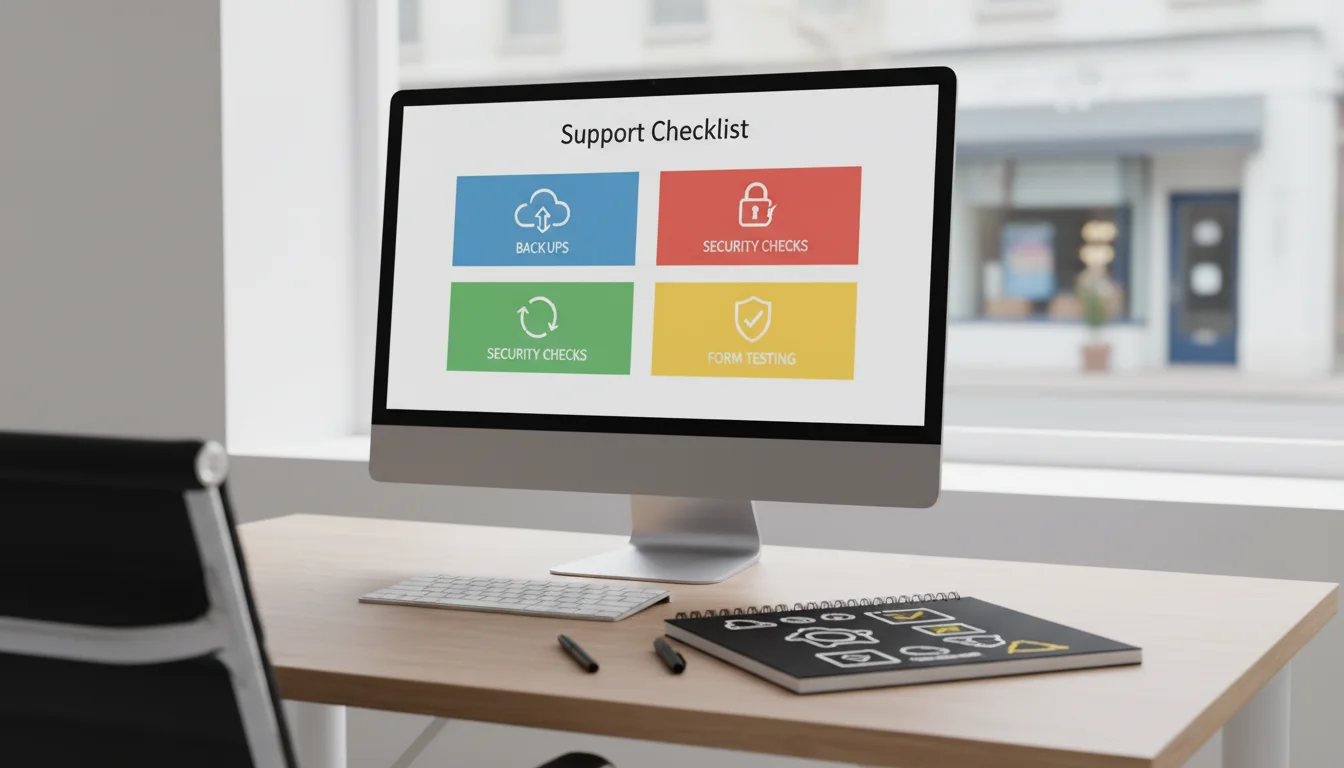
Pain, fix, result: how maintenance improves conversion and trust
Pain: the owner or manager feels like the business is doing enough work online, yet results stay inconsistent. Questions repeat. Leads come in without context. Staff answers the same issues manually. Important updates slip because no one owns them.
Fix: simplify the process around one source of truth, one visible workflow, and one clear next step for the customer. Write in plain language. Keep the message tied to business outcomes. Build support tasks into a predictable schedule instead of reacting after something breaks.
Result: visitors get faster clarity, teams spend less time chasing details, and the business earns better leads from the same traffic base. That is what conversion improvement should feel like in practice: calmer operations with stronger buyer confidence.
Checklist: the weekly and monthly support rhythm
Use this short checklist to keep momentum. It is intentionally simple because complicated playbooks rarely survive real operations.
- Check the top conversion path and make sure it works on mobile.
- Review the accuracy of offers, hours, pricing, or service details.
- Test one contact flow from first click to final confirmation.
- Review the last 30 days of traffic, calls, or lead quality.
- Decide the one update that will remove the most friction this month.
- Confirm internal links still point to the correct service pages.
When one-off fixes stop making financial sense
Owners often review channels in isolation. Website issues stay in one bucket, visibility issues in another, and operational issues somewhere else. Buyers do not experience the business that way. They experience one path.
That is why Sowynet treats content, conversion, local visibility, and systems support as connected work. A stronger page structure improves trust. Better follow-up improves lead recovery. Cleaner reporting improves decisions. Over time, those gains reinforce each other.
If the business depends on local demand, the improvement plan needs to be visible, measurable, and easy for the team to maintain after the first round of fixes.

How Sowynet handles website support for local businesses
We start with the bottleneck, not the trend. Some businesses need a visibility fix first. Others need better site support, better follow-up, or cleaner reporting. The point is to remove the biggest source of drag and then build a monthly rhythm around it.
From there, we align internal links, service pages, CTAs, and support tasks so the system stays useful after launch. That is usually where small businesses finally feel relief: not because everything became perfect, but because the work became organized.
If your team is already stretched thin, that kind of clarity is often more valuable than another disconnected campaign.
Internal linking plan
Support the next step with the right pages
Readers should not have to hunt for what to do next. This topic works best when it connects directly to a relevant service page, a supporting guide, and a contact path.
That structure helps users move faster and gives search engines cleaner intent signals about the page.
Clear next step
Need help with website maintenance services for small business?
If this issue is slowing growth, we can review the current setup, show what to fix first, and map the fastest path to cleaner conversion.
Book a quick reviewCompare website support optionsFrequently asked questions
Questions owners ask before they commit
These are the practical questions that usually come up once the pain is clear and the team wants a realistic fix.
What is included in website maintenance services for small business?
A strong plan usually covers backups, plugin and theme updates, security checks, uptime review, page speed checks, content edits, and form testing. The exact mix depends on how critical the site is to your lead flow.
How often should a small business website be maintained?
Core checks should happen every week. Technical updates, backups, and conversion reviews should happen every month, with immediate attention for broken forms, outage risks, or inaccurate business details.
Do I need a retainer if I only change my website sometimes?
If your site brings leads, yes. A retainer is usually cheaper than waiting for a broken form, outdated plugin, hacked page, or expired offer to cost you real business.
Quick summary
Short version for busy teams
Pain: local businesses lose leads when details, workflows, or follow-up systems drift. Fix: assign ownership, simplify the path, and review the system every month. Result: better trust, faster response, and stronger conversion from the same demand.
Loading related resources...
Loading recent posts...