Exception management
WMS Exception Management: Alerts That Prevent Downtime
AI exception alerts help warehouse teams resolve issues before they become SLA failures.
3PL logistics leaders in Indianapolis and across Indiana are under pressure to raise throughput without adding headcount. A focused WMS exception management plan helps protect SLAs, reduce overtime, and keep clients happy.
Most 3PLs already capture data in WMS, TMS, labor, and yard systems. The gap is turning that data into simple daily actions that teams can follow without disrupting operations.
This guide shows how Sowynet builds AI software services that improve WMS exception management with dashboards, alerts, and workflow automation.
Key takeaways
Build a focused plan that improves throughput and keeps client SLAs on track.
- Focus the bottleneck. Use the WMS exception management baseline to identify the slowest step.
- Apply AI signals. Prioritize tasks and staffing decisions with real-time alerts.
- Prove the ROI. Track KPIs that clients and finance leaders trust.
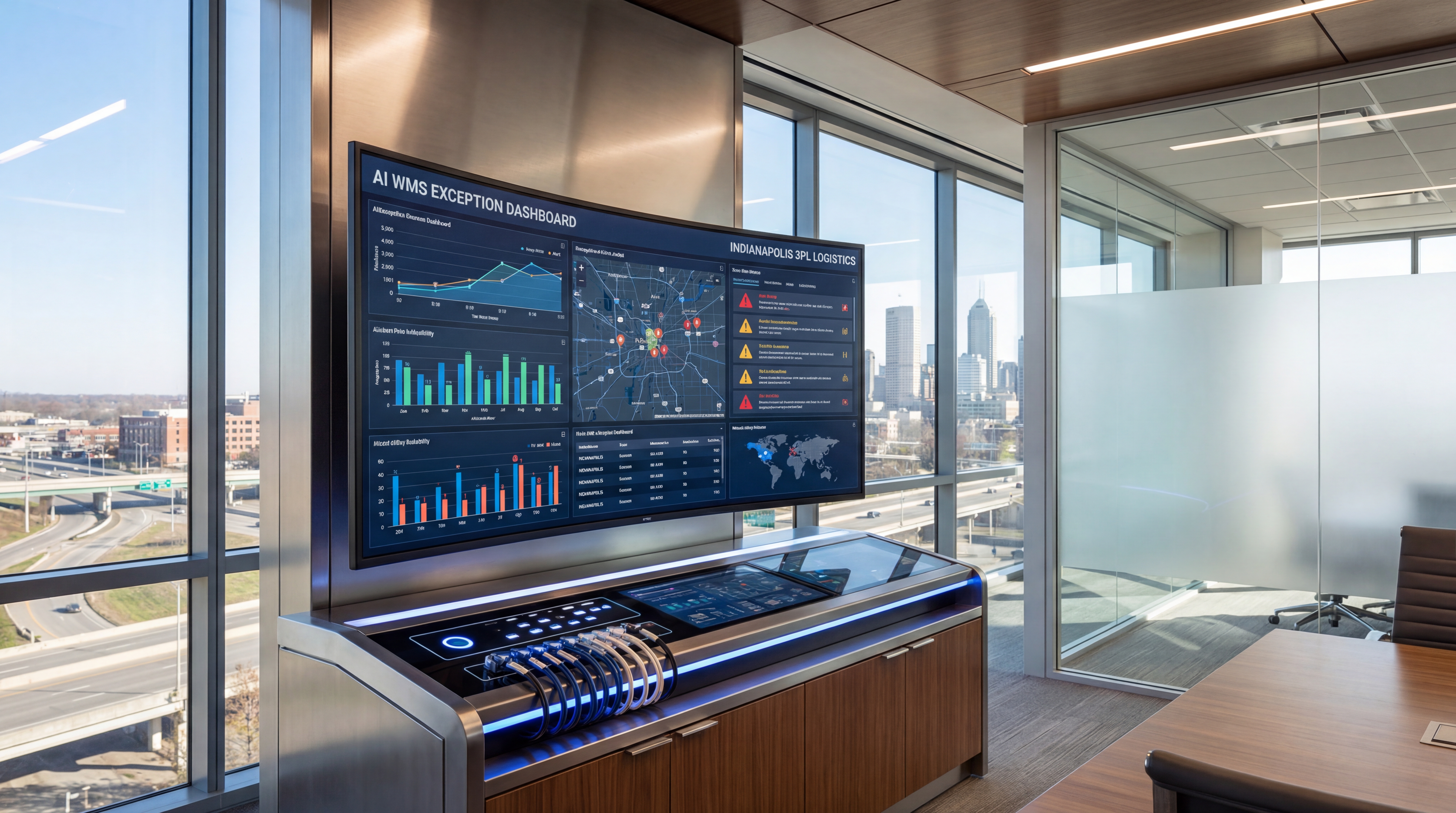
Why WMS exception management matters for 3PL operations
A clear baseline keeps teams aligned on what to fix first and where productivity leaks. Small delays compound across clients, shifts, and dock schedules.
Use this section to align supervisors, IT, and client stakeholders around the same metrics.
- Exceptions sit in queues without ownership.
- Slow response turns small issues into downtime.
- Manual escalation wastes supervisor time.
- No history of repeat incidents.
Where AI improves WMS exception management
AI does not replace the WMS. It layers smarter decisions on top of current systems so leaders can move faster without disrupting operations.
- Priority scoring based on SLA impact.
- Auto-assigned owners and escalation paths.
- Root-cause clustering by process.
- Predictive downtime alerts.
Pair this playbook with Warehouse KPI Dashboards That 3PL Leaders Actually Use, AI Warehouse Productivity Audit for 3PL Logistics Teams, and Blue Yonder (RedPrairie) WMS Optimization Playbook for Faster 3PL Throughput for a full 3PL productivity roadmap.
Data and integrations to connect
The fastest wins come when WMS, labor, and transportation data connect into one view. Sowynet builds the integrations so teams get insights without manual exports.
- WMS exception and error logs.
- Ticketing systems and incident data.
- Scanner and RF device events.
- Labor schedules and staffing data.
See what we offer or recent projects for examples of our software delivery.
Playbook: WMS exception management improvement roadmap
Use this phased plan to protect SLAs while you improve the workflow.
- Define exception severity by client and SLA.
- Map current escalation workflows.
- Integrate WMS logs with ticketing tools.
- Deploy AI scoring and ownership rules.
- Train teams on new alert workflows.
- Review incident trends monthly.
If you want this done-for-you, our team can lead the audit, build the dashboards, and coach supervisors through the rollout.
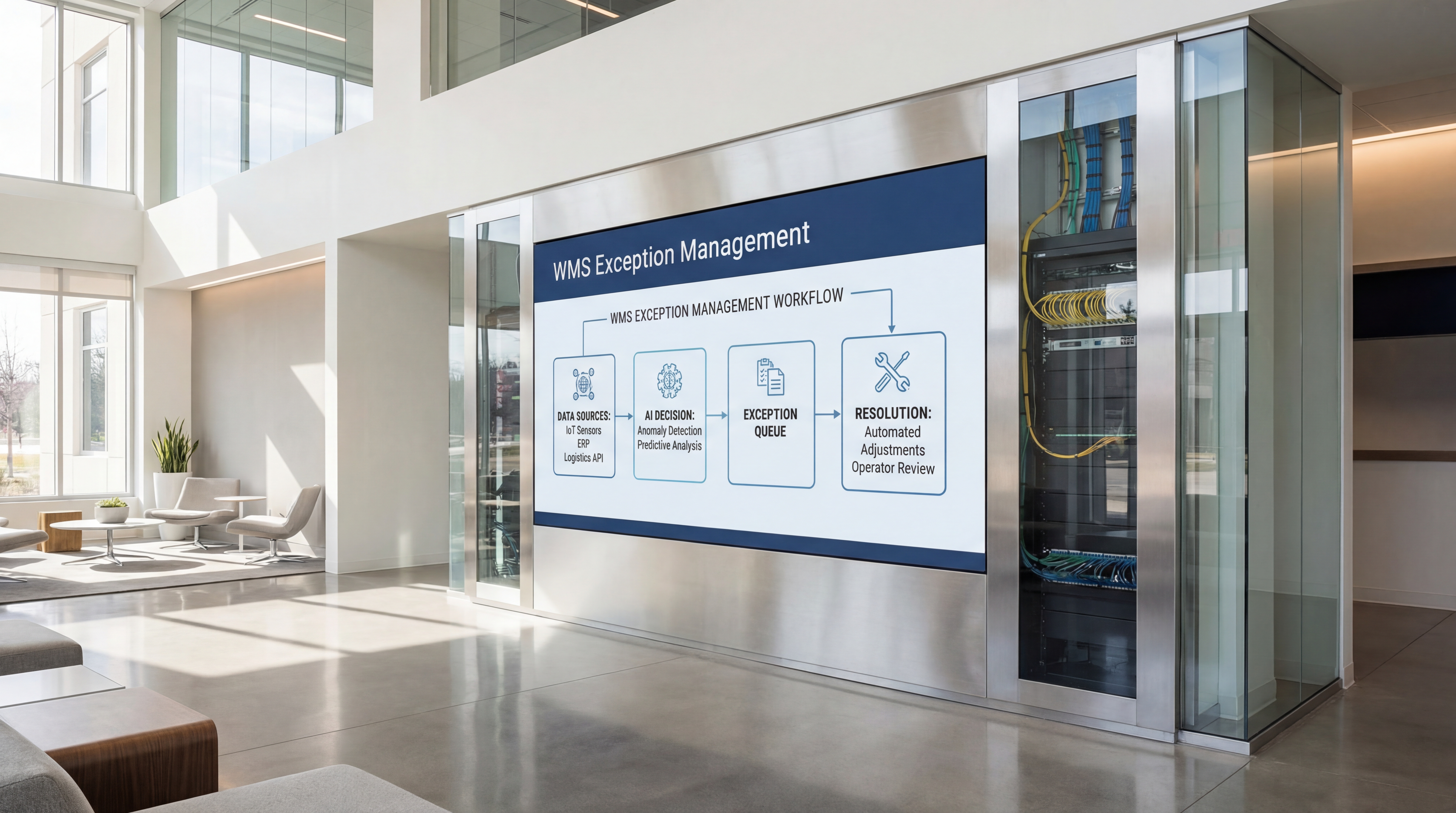
KPIs to prove productivity gains
Leadership needs proof. Track KPIs that connect productivity to client outcomes and labor cost.
- Exception resolution time.
- SLA misses from exceptions.
- Repeat incident rate.
- Downtime minutes per week.
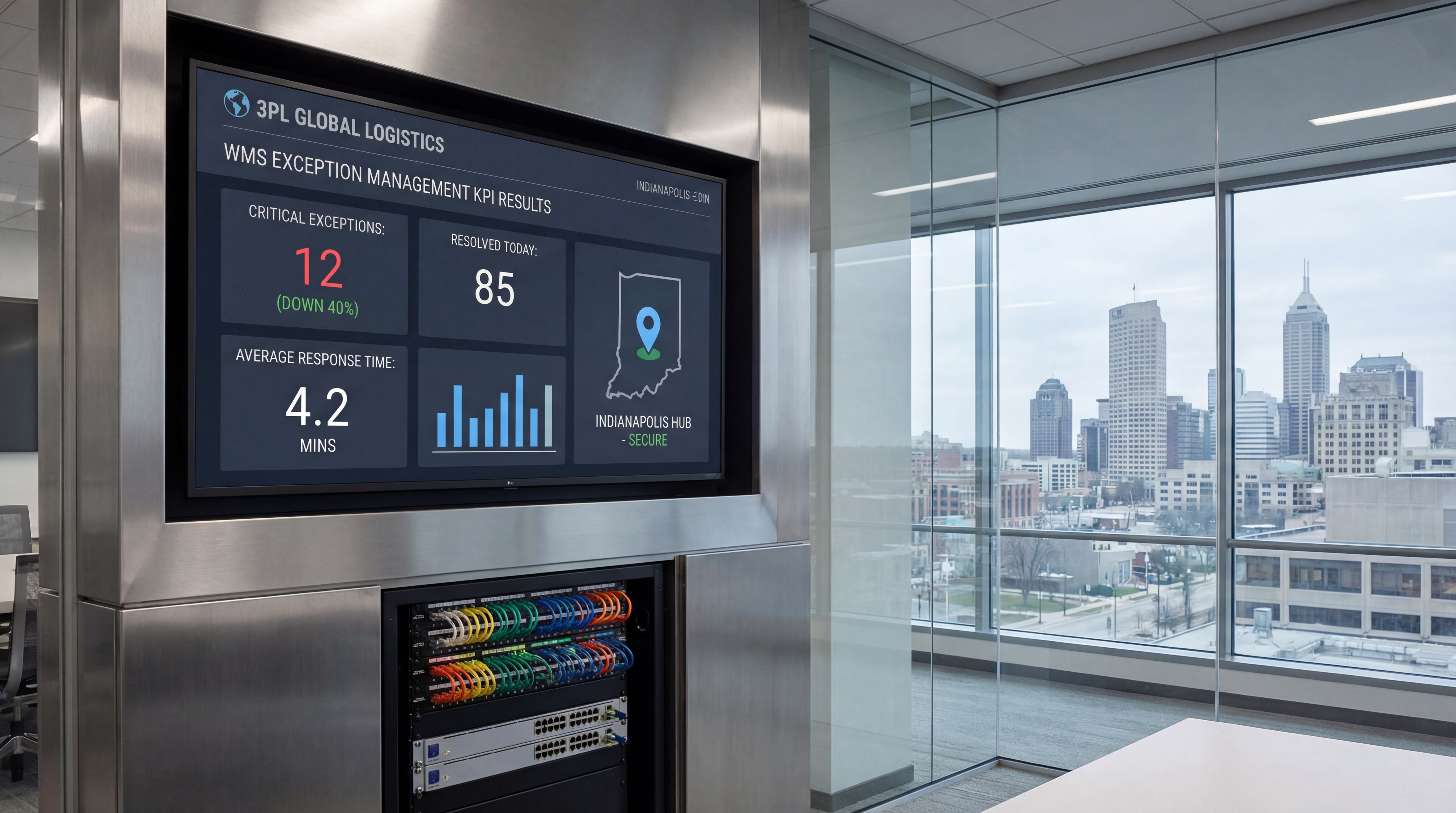
Common mistakes that stall results
Most delays come from small oversights. Avoid these traps to keep momentum.
- Alert fatigue from too many notifications.
- No clear owner for each exception.
- No post-incident review process.
- Ignoring staffing impact on response time.
How Sowynet supports logistics teams
Sowynet builds AI dashboards, integrations, and workflow automation that improve productivity without disrupting operations. We work with logistics teams across Indiana and deliver clear documentation, training, and ongoing support.
Ready to talk? Schedule a meeting and we will map a custom plan for your sites.
Local rollout plan for WMS Exception Management: Alerts That Prevent Downtime in Indiana
Indiana 3PL teams succeed with WMS Exception Management: Alerts That Prevent Downtime when the rollout starts with process clarity. Outline inbound, picking, and shipping handoffs by client so each shift knows what to protect and where to improve.
Use a two-week baseline period to capture throughput, overtime, and exception aging. Those metrics become the scoreboard for AI alerts and supervisor coaching.
From there, connect WMS data with labor plans and appointment schedules to spot bottlenecks before they hit the dock. A small pilot zone builds confidence before you scale the playbook.
- Inventory the top five client SLAs and high-risk SKUs.
- Confirm RF and scanner data quality across shifts.
- Standardize wave labels and exception categories.
- Build a daily supervisor scorecard with three KPIs.
- Set alert thresholds tied to dock departure windows.
- Plan weekly reviews with ops, IT, and account leads.
Need a guided rollout? Schedule a logistics discovery call and we will map the steps with your team.
Measurement framework for WMS Exception Management: Alerts That Prevent Downtime
A strong measurement plan keeps WMS Exception Management: Alerts That Prevent Downtime from turning into another dashboard that no one trusts. Define the KPI owners, refresh timing, and escalation rules before you roll out alerts.
Pair the data with a weekly operating rhythm: Monday throughput review, midweek exception check, and a Friday labor vs. volume recap. That cadence turns insights into actions.
- Dock dwell time and inbound-to-putaway speed.
- Picker productivity by zone and equipment.
- Exception recovery time and root-cause tags.
- Cycle count variance and inventory accuracy.
- Labor utilization by shift and daypart.
- Client experience scores tied to on-time shipping.
When you are ready for a full rollout, book a logistics AI review and we will build a roadmap.
Ready to improve WMS exception management?
We handle audits, integrations, and AI dashboards that help 3PL leaders move faster with confidence.
Book a logistics AI reviewWhat 3PL leaders ask before WMS Exception Management: Alerts That Prevent Downtime
Before approving WMS Exception Management: Alerts That Prevent Downtime, Indiana operations leaders want clear answers about data quality, visibility, and adoption. A good plan shows how the workflow will change on the floor, not just in dashboards.
Use the questions below in stakeholder meetings so IT, ops, and account teams stay aligned.
- Which locations or clients will pilot first?
- How will alerts reduce overtime and rework?
- What data gaps could slow implementation?
- Who owns KPI definitions and reporting cadence?
- How do we keep dashboards trusted by supervisors?
- What does success look like after 90 days?
A focused answer for each item speeds approvals and keeps timelines realistic.
Implementation timeline for WMS Exception Management: Alerts That Prevent Downtime
Most Indiana 3PL teams can stand up WMS Exception Management: Alerts That Prevent Downtime dashboards in a few weeks if data access is clear. We focus on the minimum data set needed to unlock quick wins, then expand after the pilot proves value.
Our team provides documentation, training, and KPI reviews so the system stays in use after launch.
- Week 1: process mapping and KPI alignment.
- Week 2: data pulls and model validation.
- Week 3: dashboard build and alert tuning.
- Week 4: pilot launch and supervisor training.
- Week 6+: scale and monthly reviews.
Ready for a rollout? Book a discovery call to map your timeline.
Execution framework
How to make WMS exception alerts useful in weekly operations
Pain: exception alerts become noise when every small issue looks urgent, the same alert repeats without context, and teams stop trusting which events actually threaten service or downtime.
Fix: keep one alert strategy with clear severity rules, one owner for triage, and one review loop that measures whether alerts reduce downtime, rework, or SLA misses.
Result: alerts become more actionable, supervisors respond faster to the issues that matter, and the WMS supports operations instead of interrupting it.
- Prioritize alerts by business impact, not just event count.
- Route each alert type to one accountable owner.
- Track repeat exceptions that indicate process design problems.
- Review false positives before adding more automation.
- Measure downtime avoided and recovery speed.
- Retire noisy alerts that do not change behavior.
If you want this turned into a working exception system, book a strategy call and we will map the first 30 days with your team.
Frequently asked questions
Common logistics questions
Share these with operations leaders to speed approvals.
Can AI reduce alert fatigue?
Yes. AI prioritizes the alerts that actually impact SLAs.
Does this work with Blue Yonder or RedPrairie?
Yes. We can integrate WMS logs from Blue Yonder (formerly RedPrairie).
How do we measure impact?
Track resolution time, downtime minutes, and SLA recovery.
Quick summary
Wms Exception Management at a glance
A short summary you can share with leadership to explain the value.
- Faster response Route exceptions to the right owners.
- Less downtime Predict issues before they cascade.
- Clear evidence Track incident history by process.
Use this summary to give your team quick context.
Pain - Fix - Result Framework
From alert noise to fast exception recovery
Pain: Operations lose time when exception queues grow, alerts repeat without context, and teams cannot tell which issue threatens service first.
Fix: We align WMS alert logic, triage ownership, and exception workflows so critical issues surface quickly and route to the right team.
Result: Faster resolution, less alert fatigue, and better control over downtime, rework, and SLA recovery.
Next step
Apply this topic with an exception alert plan
If this article matches what you need, start with the exception types that currently create rework, downtime, or SLA misses.
Then connect alert logic to triage ownership, escalation windows, and corrective action so the team knows exactly what happens after an alert fires.
That turns alerts into a recovery tool instead of more background noise.
View the related service pageRelated reading
Explore related guides and service pages
These links expand the topic and help readers compare practical next steps.
Loading related resources...
Loading recent posts...