Grocery loss prevention
Grocery Store Loss Prevention in Indiana
Shrink hurts margins. Here’s how Indiana grocery stores can blend camera coverage, access control, and segmented networks to reduce theft, protect staff, and speed audits.
Grocery layouts mix wide aisles, loading docks, cold storage, and cash-heavy lanes. Loss prevention succeeds when coverage, access, and networking work together—and when managers can pull proof quickly.
This checklist distills what works across Indianapolis, Carmel, and statewide stores: camera placement, POS-safe networks, and reporting that satisfies LP teams and insurers.
Key takeaways
Map cameras to entrances, lanes, high-shrink aisles, docks, and offices. Segment POS/cameras from guest Wi‑Fi. Train managers on exports and alerts.
- Priority coverage. Entrances, cash lanes, self-checkout, liquor/tobacco aisles, and docks get the clearest angles.
- Stable networks. POS, cameras, and scanners ride segmented, monitored networks so uptime survives rushes.
- Audit-ready reporting. Fast exports with matched access logs keep insurers, LP, and HR aligned.
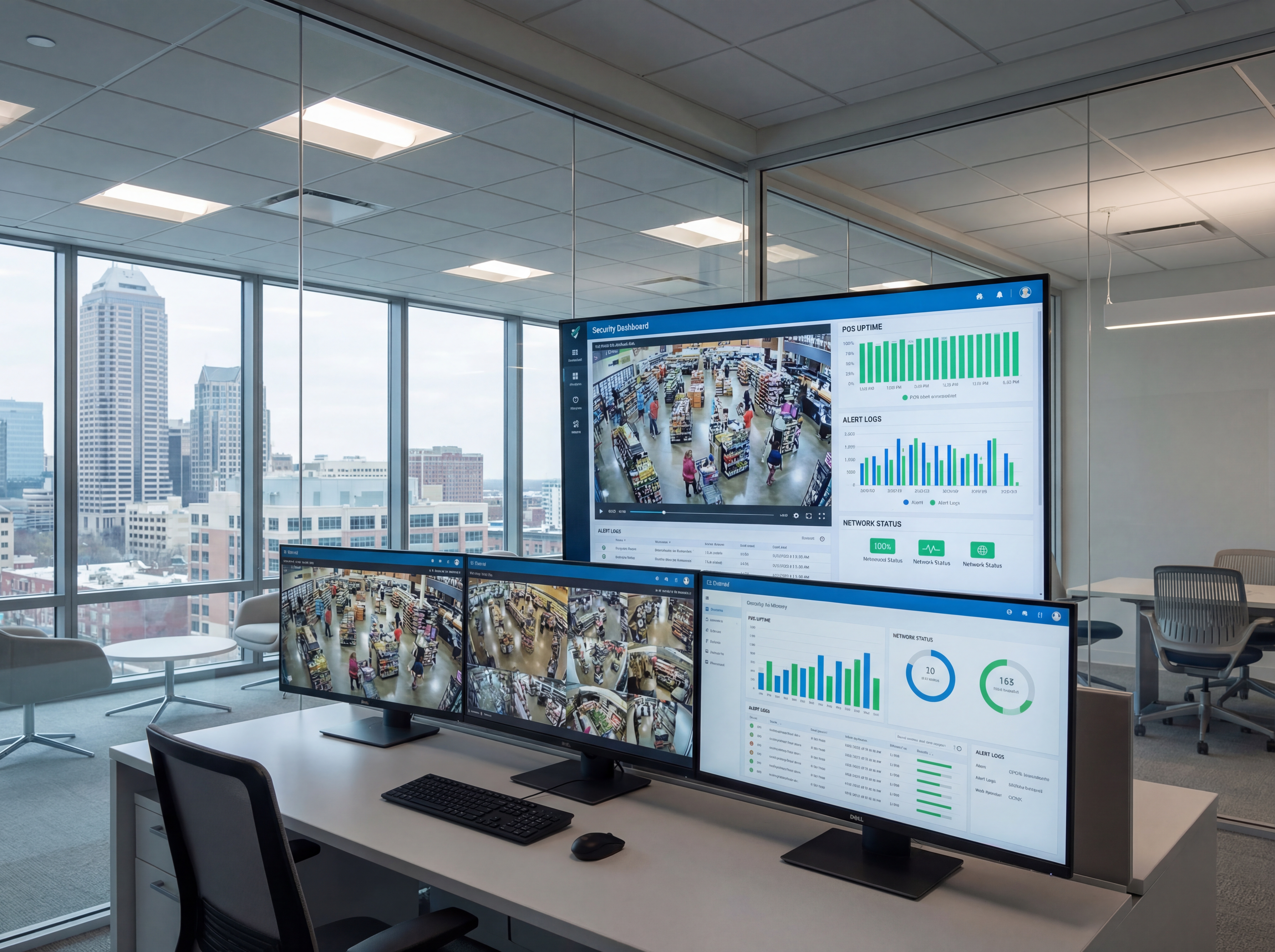
Camera coverage for grocery shrink
Cover entrances, exits, and the aisles where shrink is highest. Add context views that show entire lanes or docks for disputes and safety.
- Entrances/exits and vestibules for faces and traffic.
- Cash lanes and self-checkout for disputes and training.
- High-shrink aisles: liquor, tobacco, beauty, electronics.
- Docks, coolers, and stockrooms for receiving, safety, and vendor oversight.
- Manager’s office and safe for audits and HR investigations.
Segment networks for POS, scanners, and cameras
Busy stores push a lot of data—scales, scanners, POS, and cameras. Keep traffic isolated and monitored.
- Create VLANs for POS, cameras, handhelds, and guests; block lateral access.
- Use PoE switches with power headroom for cameras and APs; monitor budgets.
- Wire AP backhaul where possible; place APs for aisles, front-end, and offices.
- Apply QoS and bandwidth caps so guests can’t choke POS or camera traffic.
Link access control with cameras
Doors to stockrooms, offices, and docks need more than a lock. Pair readers with cameras for faster investigations.
- Badge or code readers on offices, docks, and high-shrink areas.
- Sync time and naming between access control and cameras to shorten reviews.
- Role-based access for managers, LP, and vendors with clear audit trails.
Playbook: plan, deploy, maintain
Use this three-phase outline to keep projects predictable and make sure every stakeholder knows what is happening next.
- Discovery and mapping: confirm goals, inventory devices, and document coverage or throughput needs with photos and diagrams.
- Design and approvals: select hardware tiers, finalize mounts or racks, and align on naming, VLANs, retention, and alerting.
- Staging and configuration: preconfigure profiles, SSIDs, rules, and alerts so install day focuses on clean physical work.
- Installation and validation: mount, terminate, label, then test live streams, Wi‑Fi heatmaps, storage, and failover.
- Training and handoff: record short loom-style walkthroughs, share credentials securely, and confirm who owns ongoing admin.
- Ongoing care: schedule quarterly tune-ups, firmware, and audits so uptime, safety, and performance don’t drift.
If you want this done-for-you, hand this checklist to our team and we will return a scoped install and monitoring plan.
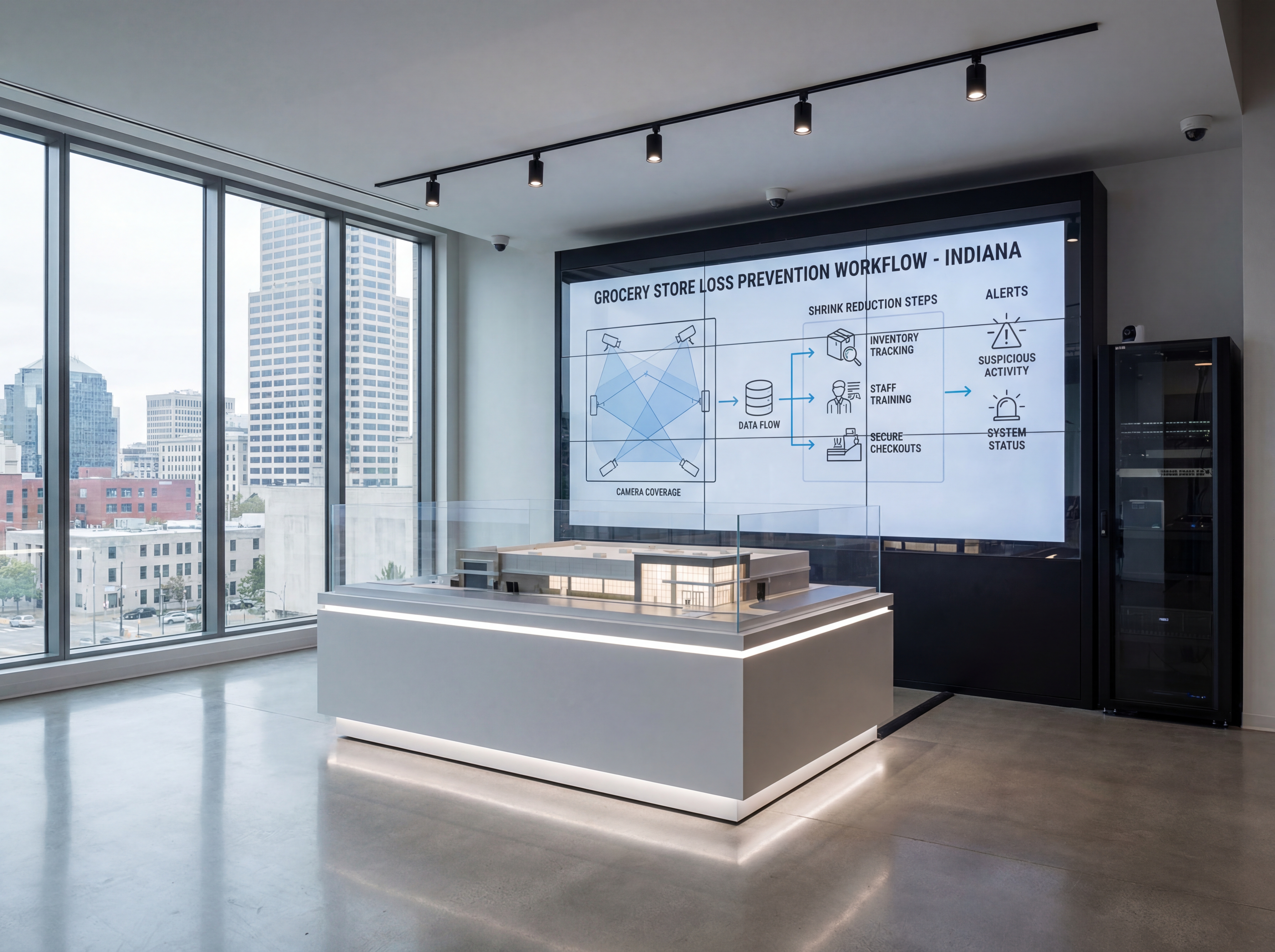
Common mistakes to avoid
Most delays come from small oversights. Prevent them up front.
- Under-covering self-checkout and liquor aisles where shrink concentrates.
- Mixing POS and guest Wi‑Fi, causing outages during rushes.
- No clear retention or export workflow for LP and insurance.
- Unlabeled racks and drops, making troubleshooting slow and costly.
Measurement and reporting
Report on outcomes so leadership sees ROI and teams stay funded.
Operational KPIs
- Camera and POS uptime
- Alert response times and false positives
- Storage retention versus policy
- Bandwidth headroom at peak traffic
Business KPIs
- Shrink reduction trends by department
- Incident resolution times with video evidence
- Insurance/LP audit outcomes
- Claims supported with footage and access logs
Share a one-page monthly summary that highlights action items, blockers, and upcoming changes so every stakeholder stays aligned.
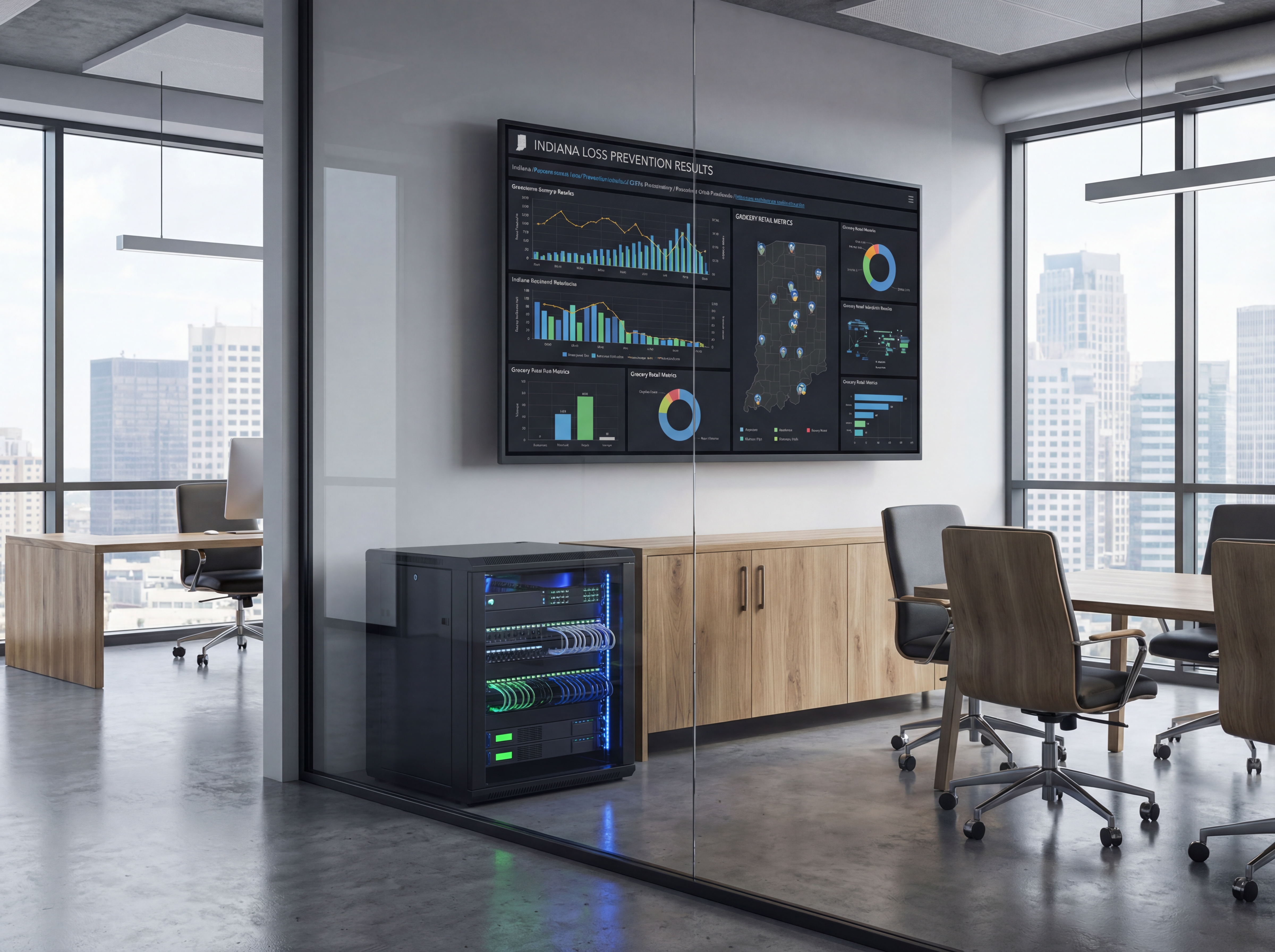
Indianapolis and Indiana planning checklist for Grocery store loss prevention: cameras, networking, and audits
Strong coverage starts with a site walkthrough and a simple map of entrances, parking, loading docks, and cash-handling areas. This is where Grocery store loss prevention: cameras, networking, and audits decisions should start so the footage matches how your team actually uses the space.
Plan for lighting, weather exposure, and camera heights before choosing hardware. Indiana weather swings make housing, seals, and cable routing just as important as lens choice.
We help teams in Indianapolis and Carmel align camera placement with network capacity, storage retention, and access control so investigations move faster.
- Map every entry, POS area, and high-value zone.
- Confirm resolution targets for faces, plates, and aisles.
- Plan retention days and storage for peak periods.
- Coordinate cabling paths and PoE switch capacity.
- Decide who can view, export, and audit footage.
- Add signage and policies that support compliance.
Explore our security and networking services for camera installs, NVR setup, and monitoring workflows.
Maintenance and response plan for Grocery store loss prevention: cameras, networking, and audits
Great footage is useless if cameras are offline. A maintenance plan keeps Grocery store loss prevention: cameras, networking, and audits reliable through winter storms, humidity swings, and power events that affect Indiana sites.
Build a response playbook so managers know how to pull clips fast, secure exports, and notify the right stakeholders. That consistency reduces risk and speeds investigations.
- Quarterly lens cleaning and focus checks.
- Firmware updates scheduled during low-traffic hours.
- Monthly storage health and backup verification.
- Test night vision and motion alerts by zone.
- Audit user access logs for compliance.
- Refresh incident response contacts every quarter.
Sowynet provides ongoing monitoring and support so your security footage is always ready when it matters.
Need shrink reduction without outages?
We build grocery-ready camera coverage, access control, and Ubiquiti networks that stay online during rushes.
Plan my grocery rolloutQuestions Indiana teams ask before Grocery store loss prevention: cameras, networking, and audits
Property leaders in Indianapolis and Carmel want to know how Grocery store loss prevention: cameras, networking, and audits will reduce incidents, simplify investigations, and protect staff. Clear answers to the questions below prevent delays and change orders.
- Which zones need facial, plate, or aisle coverage?
- How many days of retention are required by policy?
- Who will review footage and how fast?
- Can the network support the camera load?
- Do we need access control integration?
- How will we keep cameras maintained year-round?
These checkpoints help you avoid gaps that show up after installation.
Installation timeline for Grocery store loss prevention: cameras, networking, and audits
A typical Indiana installation begins with a walkthrough and coverage map, followed by cabling, camera mounting, and NVR configuration. We finish with testing and training so your team can access footage immediately.
- Site survey and coverage plan.
- Cabling, PoE provisioning, and labeling.
- Camera mounting, aiming, and focus tuning.
- NVR setup, retention policies, and alerts.
- Training and a final footage verification.
We also offer ongoing support to keep footage reliable year-round.
Frequently asked questions
Common grocery questions
Share these with LP, operations, and IT leads.
Do you install overnight?
Yes. We stage gear and work off-hours to avoid guest disruption.
Can you integrate access control?
We pair readers with cameras and align naming/time so audits are fast.
How long is retention?
Most stores keep 30–90 days. We size storage and cloud mirrors to match policy.
Quick summary
Grocery loss prevention at a glance
Strategic coverage, segmented networks, and audit-ready reporting reduce shrink without slowing checkout.
- Coverage where it counts Entrances/exits, self-checkout, high-shrink aisles, docks, and offices.
- Stable, segmented networks POS, scanners, and cameras stay online during peak hours.
- Fast audits Matched access logs and video exports for LP and insurance.
Use this summary to give your team fast context.
Related resources
Pain - Fix - Result Framework
Where grocery loss-prevention systems usually fail
Pain: Coverage gaps, weak retention planning, and unclear review ownership leave managers reacting after the fact instead of preventing repeat issues.
Fix: Build the system around store traffic patterns, incident types, and one consistent process for review and escalation.
Result: Stronger visibility, faster investigations, and a better loss-prevention routine for every location.
Next step
Tie the system to store operations, not just hardware
Use the service page below to connect cameras, networking, and response procedures to the way your store actually runs.
That makes it easier to protect the right zones and keep the workflow manageable for managers.
It also helps multi-shift teams work from the same playbook when incidents happen.
Review store security supportRelated reading
Explore related guides and service pages
These links expand the topic and help readers compare practical next steps.
Loading related resources...
Loading recent posts...