Restaurant content
Restaurant Content Creation: Design Previews That Help Menus Sell
Restaurant content creation gets hard when the food is good, the team is busy, and nobody has time to turn specials, menu items, and offers into polished posts.
Picture a Tuesday afternoon before dinner service. The kitchen has a new taco plate, a catering offer, and a weekend special ready to promote. The food is real. The offer is clear. But the post still does not happen because someone has to choose the photo, write the caption, make the graphic, and decide where it should go.
Pain: good restaurants often have more stories than time. Fix: build a repeatable content system with strong preview designs, clear copy, and a practical publishing rhythm. Result: the restaurant shows up more consistently with visuals that help people understand what to order, when to visit, and why the offer is worth attention.
This post uses real preview assets from a 100+ design library inside editorial-style-previews. The range includes bold offer cards, neon night posts, premium dark layouts, chalkboard menus, heritage tile frames, happy hour promos, market posters, catering menus, and full-bleed photo stories. The goal is simple: help owners see what is possible, then make it easier to hand the work to Sowynet instead of adding more tasks to the shift.
Key takeaways
A restaurant does not need random posts. It needs content that turns menu items, specials, and trust signals into useful customer decisions.
- Start with real business needs. Promote menu items, offers, catering, events, and trust signals before chasing trends.
- Use design styles with purpose. A bold offer post, premium menu card, and catering announcement do different jobs.
- Make the next step easy. A 30-minute meeting is enough to review goals and map the first content batch.
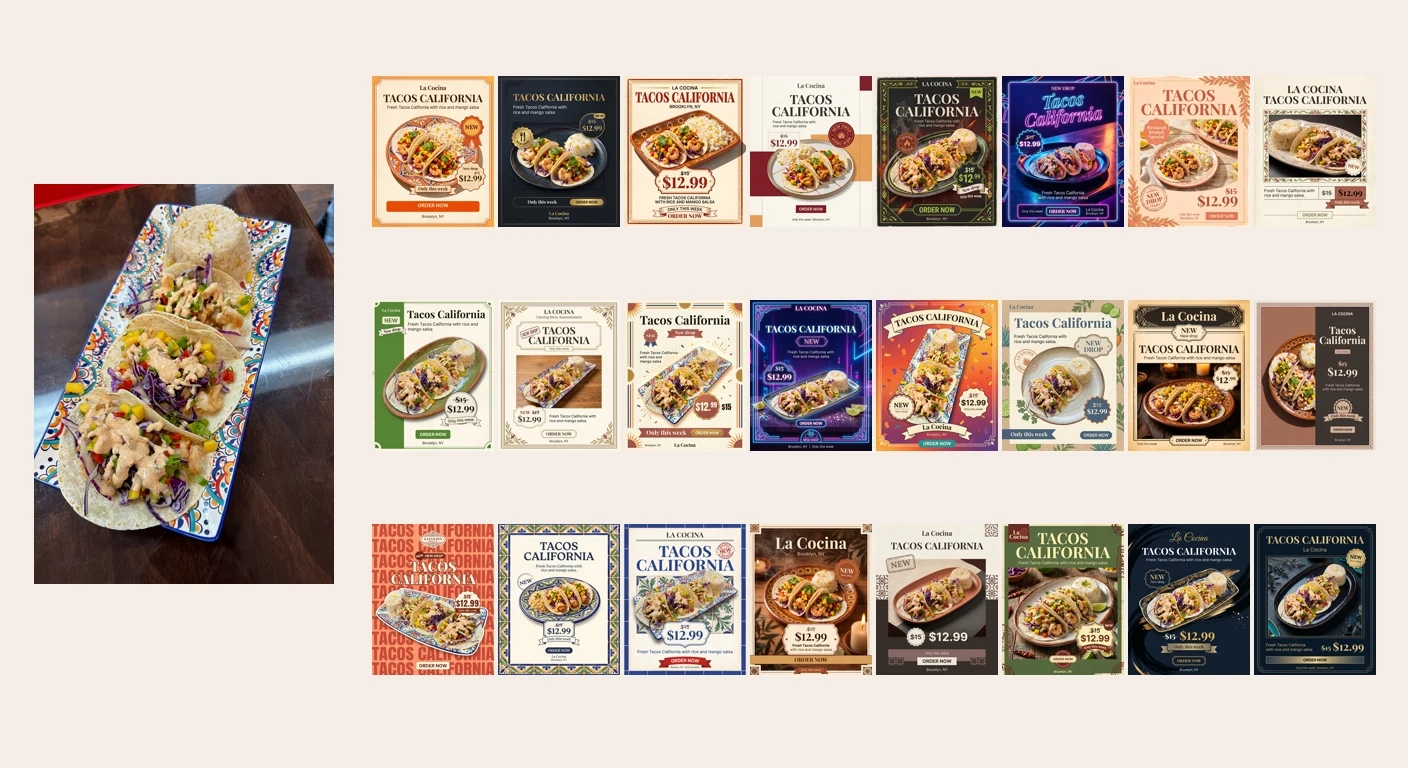
Why restaurant content creation stalls during real service
Most restaurants do not have a content problem because they lack ideas. They have a capacity problem. Lunch rush, prep lists, vendor calls, staff changes, and online orders come first. By the time the team thinks about marketing, the window to post the special may already be gone.
That is why a content system matters. The owner should not have to start from a blank screen every week. A strong system gives the restaurant a set of design directions, content categories, captions, and approval steps. Then each new item can move from kitchen idea to published post faster.
Restaurant content creation starts with the offer, not the template
A template only works when it matches the reason for the post. A taco special needs price clarity. A catering menu needs trust and planning details. A premium dinner post needs atmosphere. A Google Business Profile update needs a direct reason to call, order, or visit.
We start by asking what the content needs to do. Should it sell a weekly offer, introduce a new dish, support catering, show freshness, promote happy hour, or make the restaurant feel more polished online? Once the job is clear, the design style becomes easier to choose.
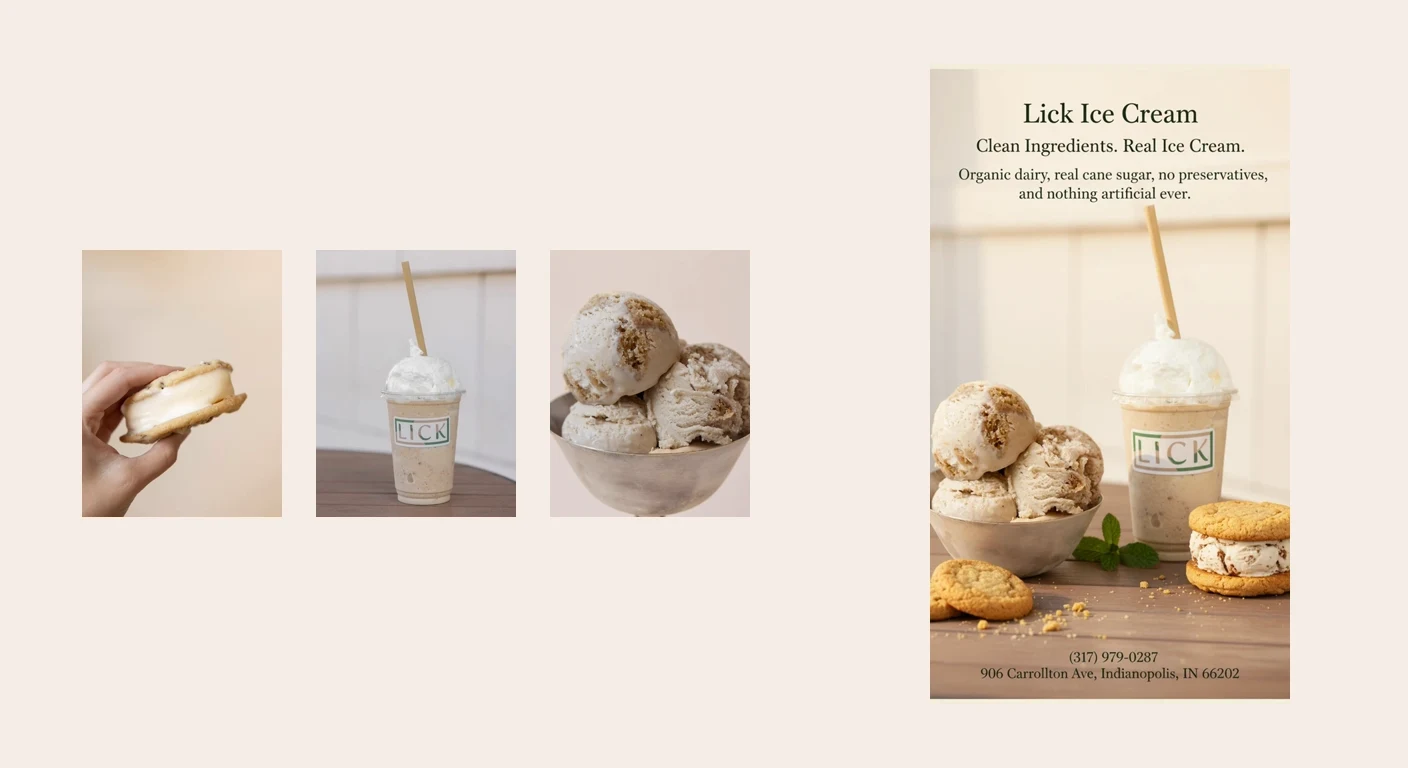
Photo credit: original Lick Ice Cream source photos are credited to Lick Ice Cream and were referenced from their social media.
This is the core workflow: the business gives us the food photo, menu detail, price, offer, or goal. We create the finished post concepts around it. For menu photo work, food remains intact; lighting/background/presentation are enhanced.
The same production logic works for ice cream shops like Lick Ice Cream, bakeries, cafes, and dessert brands. The owner can provide a few real product photos, and Sowynet can package them into a complete post that looks ready for Instagram Stories, Facebook, Google updates, or a paid social test.
Preview data used in this post
- Bold Offer and Taqueria Vibe for clear price-first promotions.
- Neon Bistro and Neon Ribbon Taco Run for late-night, weekend, and event energy.
- Premium Dark, Dark Brush Script, and Minimal Bento for higher-end brand polish.
- Chalkboard Menu Grid, Heritage Tile, and Blue Tile Menu Card for menu storytelling.
- Happy Hour, Street Market, Bakery Counter, Fish Market Azul, Catering Menu, and Full-Bleed Photo Story for campaign variety.
Style lane 1: direct offer posts for fast decisions
Bold offer, Taqueria Vibe, and daily special layouts are built for speed. The dish is visible, the price is easy to find, and the order message is clear. This type of content works well for lunch specials, limited-time menu items, delivery pushes, and slow-day offers.
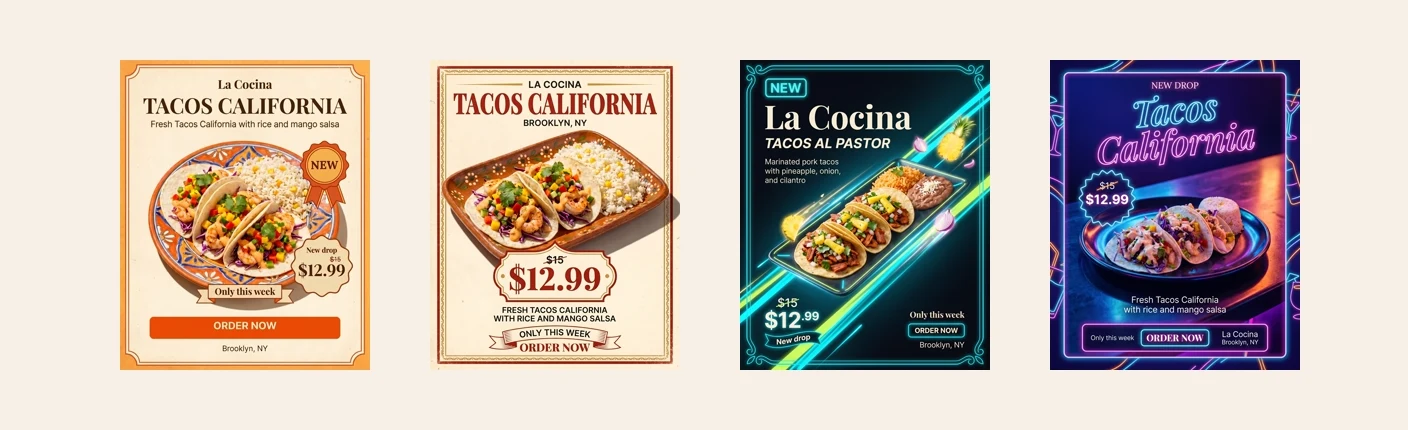
Pain: customers scroll past weak posts because the offer is unclear. Fix: use a layout that makes the food, price, and next step obvious. Result: the restaurant gives customers a simple reason to act without making them hunt for details.
Style lane 2: premium posts for brand polish
Premium dark, minimal bento, heritage tile, and clean editorial previews are less about shouting a discount and more about making one dish feel worth trying. These styles can support Instagram posts, website menu sections, Google updates, and paid social tests.
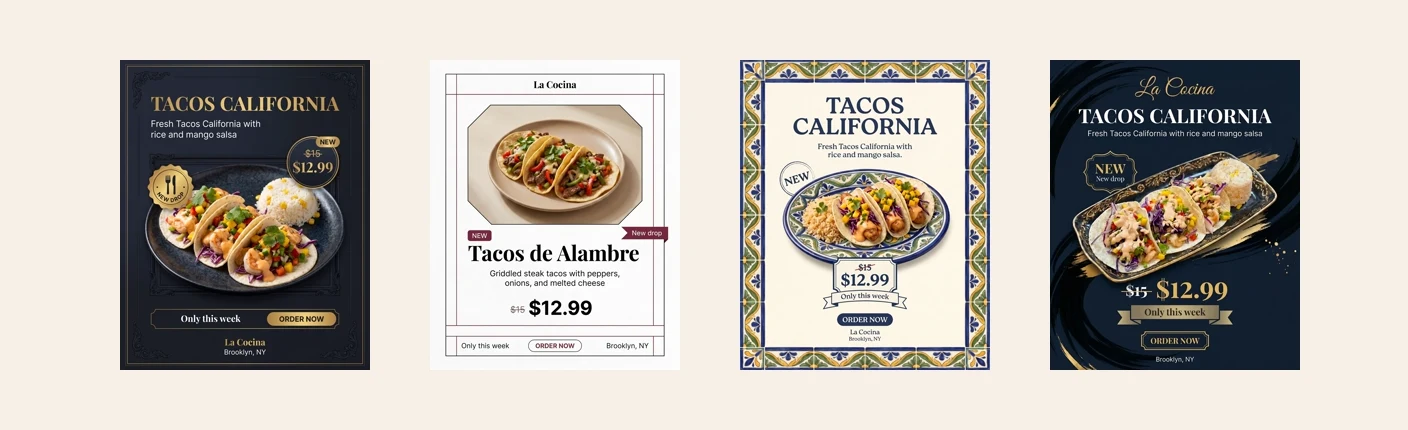
For restaurants that already have strong food but inconsistent visuals, this kind of content can make the brand feel more intentional. It gives the team a style that can repeat across tacos, bowls, drinks, desserts, and seasonal specials.
Style lane 3: catering and menu posts that answer buyer questions
Catering, chalkboard, blue tile, and menu grid content have a different job. The buyer may be planning a meeting, party, office lunch, or family order. They need to know what is available, how far ahead to order, and whether the restaurant can handle the size of the group. A menu-style design should feel organized, not just pretty.
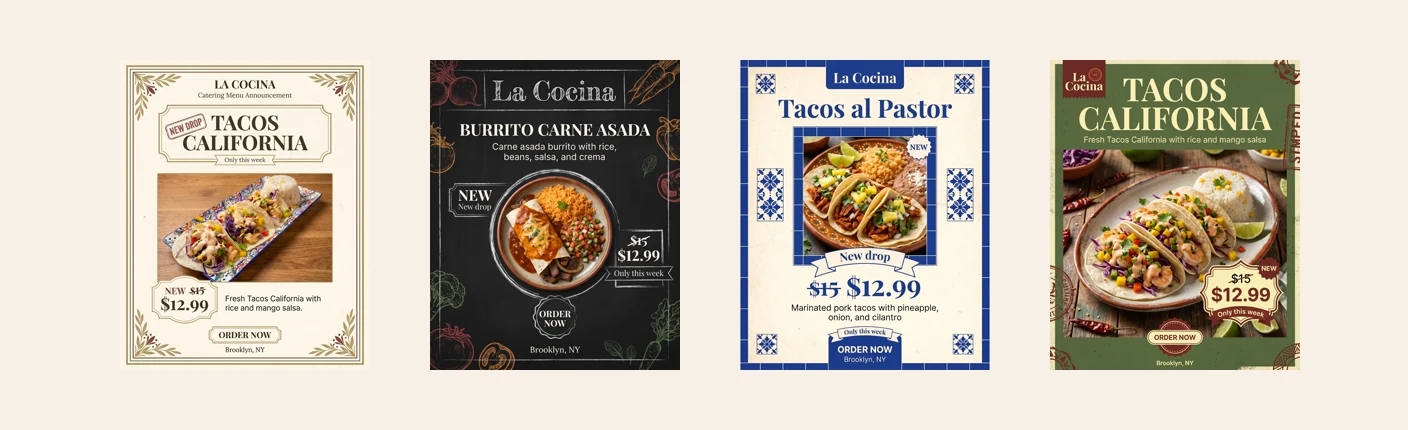
That is where Sowynet can help connect visuals with copy. The design gets attention, but the description carries the details: portions, ordering window, pickup or delivery, minimums, and the best way to contact the restaurant.
Style lane 4: story, event, and nightlife posts
Neon bistro, red sauce newsprint, happy hour, street market, and full-bleed photo styles give the content a stronger campaign feel. These can work for chef notes, weekly specials, new sauce launches, family recipes, staff picks, nightlife posts, or a small story behind a menu item.
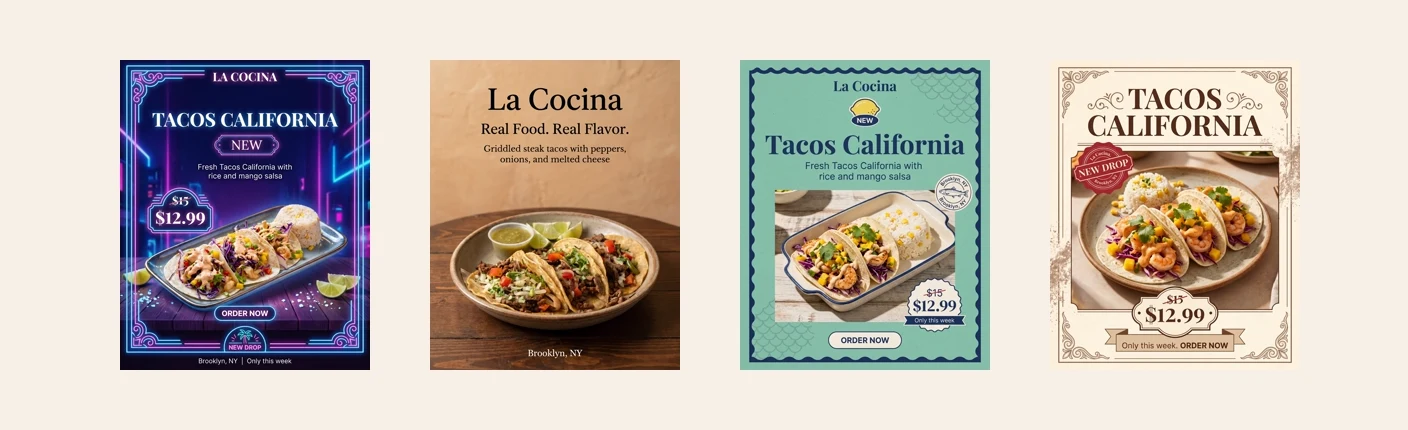
Restaurants often underuse these moments. A customer may not know why a dish matters, what makes the sauce different, or why the special is only available this week. A story-style post helps the food feel memorable before the customer even arrives.
A practical monthly content playbook for restaurants
Restaurant content works better when each post has a job. A simple monthly plan can cover the basics without overwhelming the team.
- Choose two menu items that need more attention.
- Choose one offer or limited-time promotion.
- Choose one trust post, such as catering, reviews, team, or fresh prep.
- Choose one Google Business Profile update with a clear call or order action.
- Turn the best visual into a website or menu page update when useful.
- Review clicks, calls, orders, and questions at the end of the month.
This keeps content tied to real restaurant needs. It also gives Sowynet a clean production rhythm: plan, design, write, approve, publish, review.
How Sowynet can take care of the content creation for your business
Our role is to remove the messy middle. You know the food, the offers, the busy hours, and the customers. We help turn that knowledge into posts, visuals, captions, and website updates that are easier to publish.
We can connect this work to social media services, SEO services, website support, and related restaurant guidance like restaurant social media marketing and restaurant menu photo enhancement.
For menu photo work, food remains intact; lighting/background/presentation are enhanced. For package counts, counts refer to final delivered images, not uploads.
30-minute content review
Want content creation handled for your restaurant?
Book a 30-minute meeting with Sowynet. We will review your menu, current posts, offers, and goals, then recommend the first content batch your business should create.
Book a 30-minute meetingFrequently asked questions
Questions restaurant owners ask before outsourcing content
What does restaurant content creation include?
It can include social posts, offer graphics, menu highlights, Google Business Profile images, captions, content calendars, and landing page visuals. The exact mix should match your menu, capacity, and sales goals.
Do we need professional food photography first?
Professional photos help, but many restaurants can start with existing food images. We can review what you already have and explain what photos are needed next.
Can Sowynet manage this every month?
Yes. We can review your needs in a 30-minute meeting, then recommend a monthly content rhythm for posts, offers, menu updates, and visual refreshes.
Will the food be changed in the visuals?
For menu photo enhancement, food remains intact; lighting/background/presentation are enhanced. Content designs can also use brand graphics and layouts around approved food images.
Quick summary
Short version for busy teams
Pain: restaurants have menu items, offers, and stories but not enough time to package them into polished posts. Fix: use a repeatable restaurant content creation system with clear design styles, captions, approval steps, and monthly review. Result: the business shows up more consistently and gives customers clearer reasons to call, order, book, or visit.
Loading related resources...
Loading recent posts...