Security cameras
Security Camera Placement Indianapolis Guide
Map entrances, parking, and interior choke points so Indianapolis properties avoid blind spots and capture usable footage.
Map entrances, parking, and interior choke points so Indianapolis properties avoid blind spots and capture usable footage.
Stakeholders in Indiana ask about placement, wiring, storage, and monitoring. This guide compiles proven answers so you can brief teams and move to install without delays.
Use it as a planning worksheet, a training piece for new managers, or a checklist alongside our security and networking services. Most teams should pair placement planning with a commercial camera rollout checklist and a secure network plan for cameras.
Key takeaways
Map entrances, parking, and interior choke points so Indianapolis properties avoid blind spots and capture usable footage.
- Start with entrances, cash points, and parking to deter incidents and capture faces.
- Mount between 9 and 12 feet high with slight down tilt to reduce glare and blind spots.
- Pair coverage with lighting and clean network paths so footage stays clear and available.
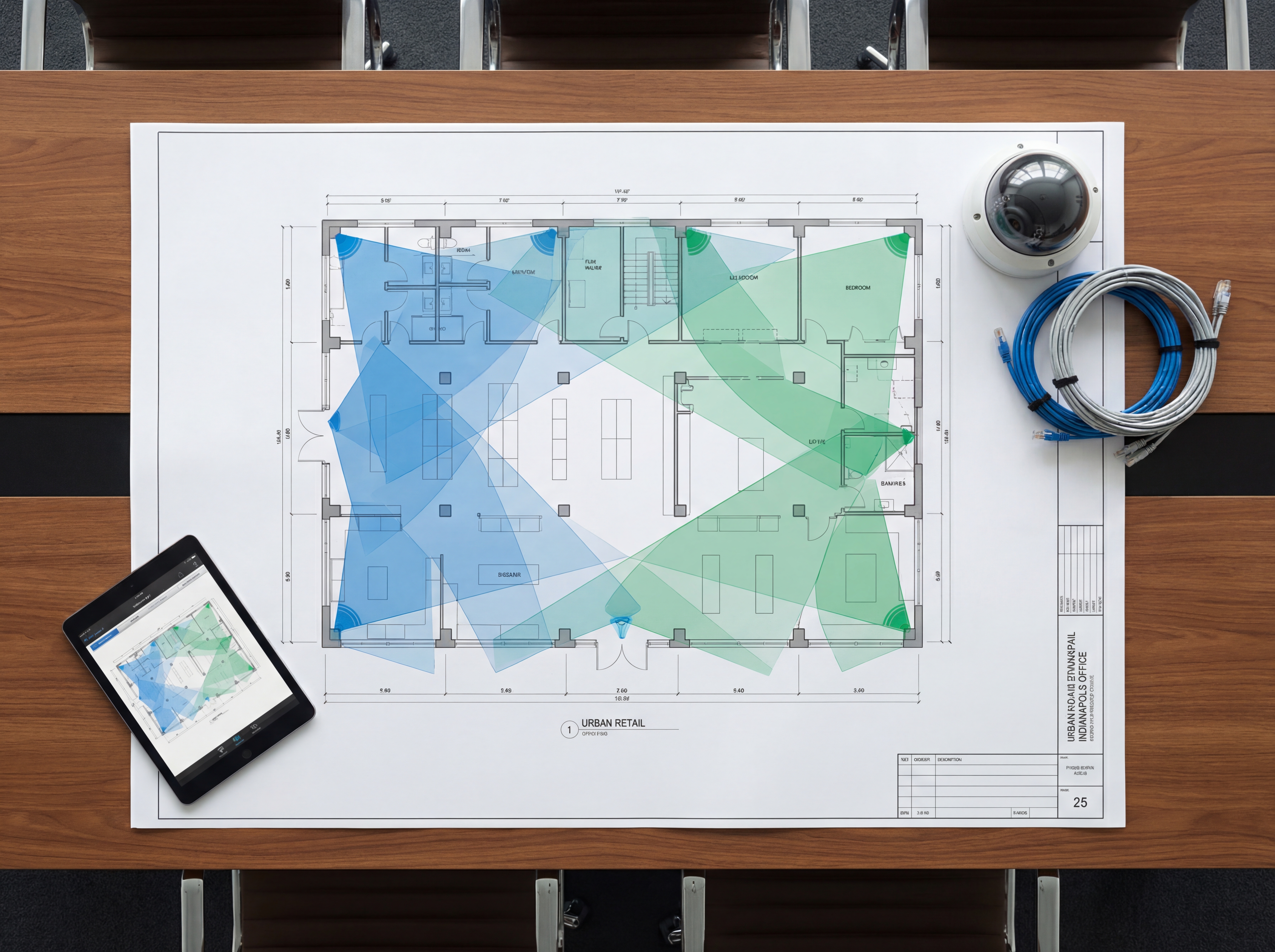
Plan coverage before buying hardware: security camera placement Indianapolis
Walk the site with a simple map and mark entrances, windows, cash wraps, and storage. Identify the must-have angles before you think about brands.
- Mark priority areas: entrances, parking, docks, stairwells, and cash or reception points.
- Balance wide and narrow fields of view so you capture both context and detail for faces or plates.
- Note mounting heights, lighting, and cable paths so installation day is predictable.
Indianapolis-specific tips
Weather and layout quirks in Indy affect camera performance. Adjust placement and hardware accordingly.
- Account for snow glare and direct sun on south-facing doors with hoods or ND filters.
- Secure conduit and junction boxes for freeze-thaw cycles and wind at parking lot poles.
- Verify bandwidth and VLANs before install so PoE switches and NVRs stay stable.
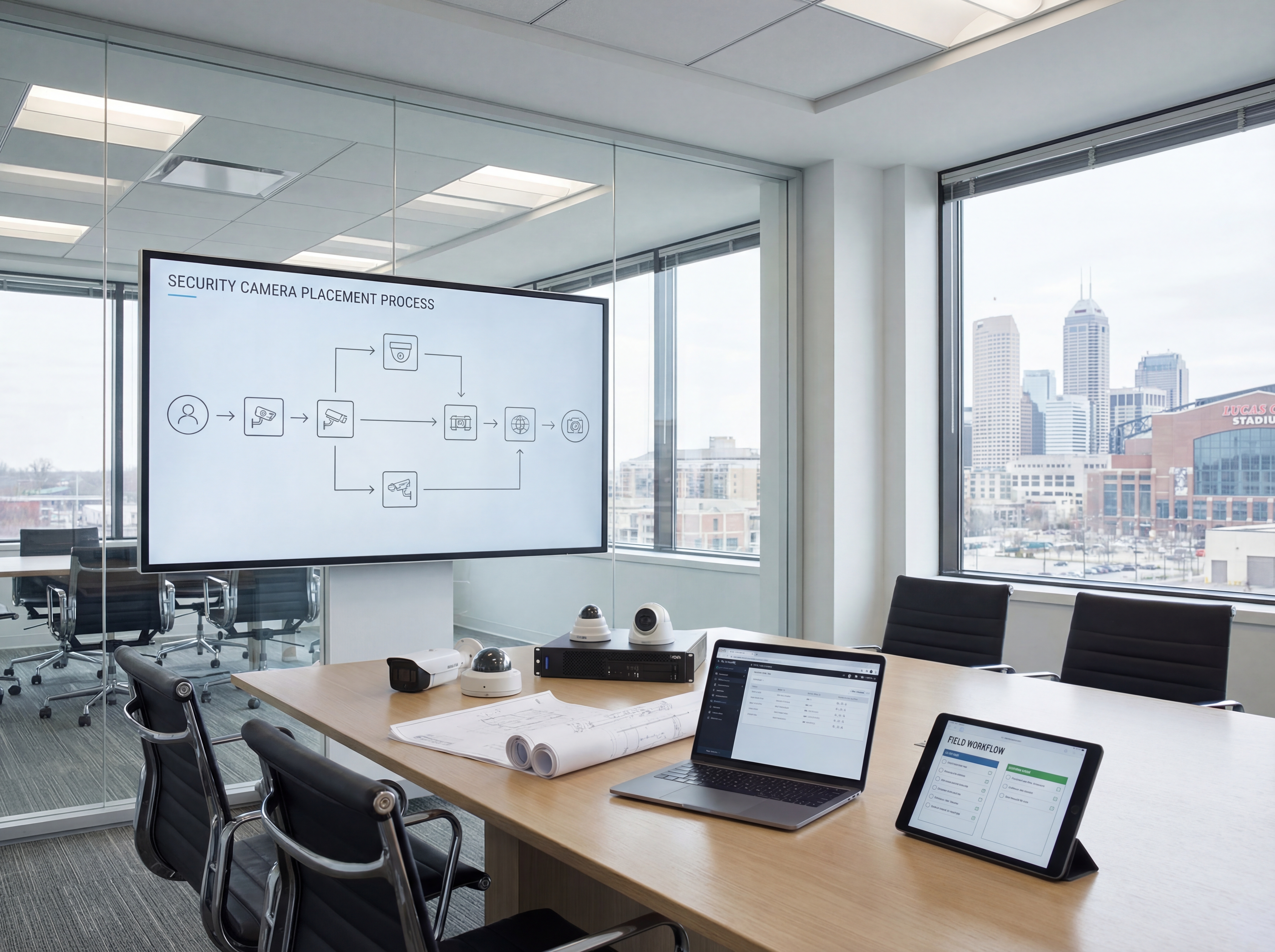
Implementation roadmap
Move from planning to live deployment with a clear five-step process.
- Discovery call to confirm goals, budget, and preferred hardware.
- Site survey with photos, mounting heights, and pathing for power and data.
- Configuration templates for naming, VLANs, retention, and alerting.
- On-site install with validation checklists and user onboarding.
- Post-launch monitoring, reporting, and quarterly tune-ups.
Tools, metrics, and templates
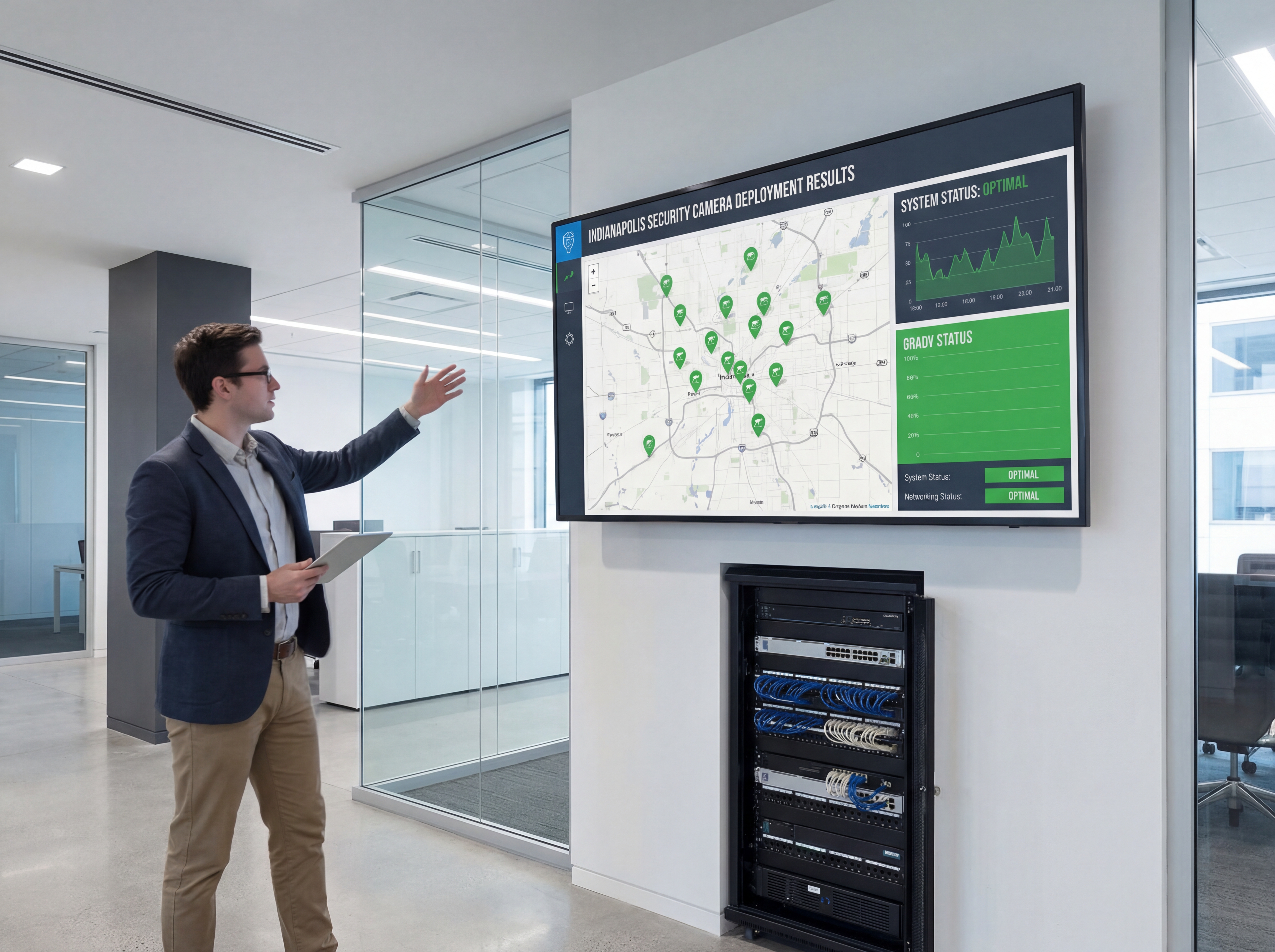
Bring data to every decision. Track adoption, uptime, and ROI so stakeholders stay aligned.
What to monitor
- Uptime and alert responsiveness
- Bandwidth and storage utilization
- User access changes and audit logs
- Ticket patterns and recurring fixes
Keyword & intent targets
- security camera placement Indianapolis
- camera angles
- commercial surveillance Indiana
- residential camera layout
Playbook: plan, deploy, maintain
Use this three-phase outline to keep projects predictable and make sure every stakeholder knows what is happening next.
- Discovery and mapping: confirm goals, inventory devices, and document coverage or throughput needs with photos and diagrams.
- Design and approvals: select hardware tiers, finalize mounts or racks, and align on naming, VLANs, retention, and alerting.
- Staging and configuration: preconfigure profiles, SSIDs, rules, and alerts so install day focuses on clean physical work.
- Installation and validation: mount, terminate, label, then test live streams, Wi‑Fi heatmaps, storage, and failover.
- Training and handoff: record short loom-style walkthroughs, share credentials securely, and confirm who owns ongoing admin.
- Ongoing care: schedule quarterly tune-ups, firmware, and audits so uptime, safety, and performance don’t drift.
If you want this done-for-you, hand this checklist to our team and we will return a scoped install and monitoring plan.
Common mistakes to avoid
Most delays come from small oversights. Prevent them up front.
- Skipping a site walk: without photos and measurements, mounts, conduit, and cable paths get improvised on install day.
- Under-sizing power or bandwidth: PoE budgets, UPS capacity, and uplink headroom need headroom for growth.
- No naming conventions: unlabeled ports, cameras, SSIDs, or VLANs slow troubleshooting and confuse future admins.
- Forgetting user access: define who can view, export, or administer before launch to avoid security gaps.
Measurement and reporting
Report on outcomes so leadership sees ROI and teams stay funded.
Operational KPIs
- Uptime and mean time to restore
- Alert volume, false positives, and response times
- Storage utilization vs. retention targets
- Bandwidth headroom during peak use
Business KPIs
- Incident reductions and resolved tickets
- Safety/compliance milestones achieved
- Customer or tenant satisfaction scores
- Time saved on audits and investigations
Share a one-page monthly summary that highlights action items, blockers, and upcoming changes so every stakeholder stays aligned.
Indianapolis and Indiana planning checklist for Security Camera Placement
Strong coverage starts with a site walkthrough and a simple map of entrances, parking, loading docks, and cash-handling areas. This is where Security Camera Placement decisions should start so the footage matches how your team actually uses the space.
Plan for lighting, weather exposure, and camera heights before choosing hardware. Indiana weather swings make housing, seals, and cable routing just as important as lens choice.
We help teams in Indianapolis and Carmel align camera placement with network capacity, storage retention, and access control so investigations move faster.
- Map every entry, POS area, and high-value zone.
- Confirm resolution targets for faces, plates, and aisles.
- Plan retention days and storage for peak periods.
- Coordinate cabling paths and PoE switch capacity.
- Decide who can view, export, and audit footage.
- Add signage and policies that support compliance.
Explore our security and networking services for camera installs, NVR setup, and monitoring workflows.
Maintenance and response plan for Security Camera Placement
Great footage is useless if cameras are offline. A maintenance plan keeps Security Camera Placement reliable through winter storms, humidity swings, and power events that affect Indiana sites.
Build a response playbook so managers know how to pull clips fast, secure exports, and notify the right stakeholders. That consistency reduces risk and speeds investigations.
- Quarterly lens cleaning and focus checks.
- Firmware updates scheduled during low-traffic hours.
- Monthly storage health and backup verification.
- Test night vision and motion alerts by zone.
- Audit user access logs for compliance.
- Refresh incident response contacts every quarter.
Sowynet provides ongoing monitoring and support so your security footage is always ready when it matters.
Want a mapped install?
Share your floor plan and priority zones. We'll design coverage and schedule a visit.
Plan an Indianapolis installExecution framework
Place cameras around incidents, not just empty wall space
Pain: camera placement goes wrong when teams focus on covering space instead of covering the moments that actually need evidence.
Fix: plan around entrances, registers, loading areas, blind spots, lighting changes, and the exact angle needed to identify people or events.
Result: footage becomes more usable, fewer cameras are wasted, and investigations move faster when something happens.
- Map every incident-prone zone before deciding the number of cameras.
- Aim for identification where it matters and general coverage where it is enough.
- Check lighting, glare, and night conditions at the same time as daytime coverage.
- Protect the field of view from shelving, vehicles, and seasonal changes.
- Use test footage to validate the angle before finalizing placement.
- Document camera purpose so future changes do not create hidden gaps.
If you want a second opinion on placement, book a camera planning review and we will help map the right zones.
Frequently asked questions
Common questions
Share these answers with stakeholders or assistants to speed approvals.
How many cameras does a small storefront need?
Most single-entrance retail shops start with four to six cameras covering the door, register, stockroom, and parking.
Do I need permits to mount cameras in Indianapolis?
Private property installs typically don't require permits, but shared walls, alleys, or lift use downtown may need coordination. We handle it when required.
What height should cameras be mounted?
Nine to twelve feet balances facial detail and vandal resistance without creating steep angles.
Quick summary
Security Cameras at a glance
Key points to share with teams before planning.
- Prioritize entrances, cash points, and parking first Prioritize entrances, cash points, and parking first.
- Match angles and lighting to reduce glare and blind spots Match angles and lighting to reduce glare and blind spots.
- Validate network and storage before installation Validate network and storage before installation.
Use this summary to give your team fast context.
Pain - Fix - Result Framework
Why poor placement wastes even good camera hardware
Pain: Cameras can be online and recording, yet still miss the face, plate, doorway, or transaction that matters most.
Fix: Plan placement around real incident paths, identification needs, and changing lighting conditions before install.
Result: Stronger evidence, fewer blind spots, and a system that supports investigations instead of disappointing them.
Next step
Tie placement decisions to the scenes you need to review later
Use the service page below to turn coverage goals, lighting, and incident zones into a practical camera map before installation starts.
That keeps placement decisions tied to evidence quality instead of convenience.
It also helps justify where extra coverage really matters.
Review camera placement supportRelated reading
Explore related guides and service pages
These links expand the topic and help readers compare practical next steps.
Loading related resources...
Loading recent posts...