Restaurant local SEO
Local SEO for Restaurants With Multiple Locations: A Practical System for Rankings, Calls, and Orders
Local SEO for restaurants with multiple locations gets messy fast when every store has different hours, different profile quality, and no clear owner for location-page updates.
One strong brand is not enough if one restaurant location has weak Google Business Profile details, another has a thin location page, and a third has the wrong order link. Searchers do not judge the group as a strategy deck. They judge the nearest location that shows up first.
Pain: the restaurant group looks inconsistent across maps, location pages, and order paths, so rankings and calls stay uneven from store to store. Fix: build one repeatable local SEO system for location pages, Google Business Profile upkeep, reporting, and website support. Result: every location gets a cleaner chance to rank, convert, and support calls or orders without daily chaos.
This matters most for owners and operators who need a real system, not a pile of disconnected tactics. It should connect to SEO services, practical website support, and restaurant-specific profile work like Google Business Profile for restaurants.
Key takeaways
Multi-location restaurant SEO works best when every store has accurate local assets, one shared operating standard, and reporting that shows which location needs the next fix.
- Clean the basics first. Hours, phone numbers, order links, and categories create more lift than random posting.
- Give each store its own page. One page per location helps searchers and search engines understand what is unique about each restaurant.
- Track performance by location. Group-level traffic hides weak stores that are quietly losing calls and orders.

Why strong restaurant brands still lose local visibility
Many restaurant groups assume the brand alone should carry local rankings. But local search does not reward brand strength in the abstract. It rewards accuracy, proximity, relevance, and a clear next step for the searcher. If one location has weak photos, stale details, or a thin landing page, that store can underperform even when the brand is well known.
This creates a frustrating pattern. One location ranks well and gets steady calls. Another location in the same city barely earns map actions. A third gets profile views but weak website clicks because the landing page does not match what the guest expected. From the outside, it looks random. In practice, it is usually an operating problem.
That is why owners need to treat local assets like store infrastructure. If a location page, order path, or profile detail drifts out of sync, the local SEO system weakens before the reporting even catches up.
Pain, fix, result: local seo for restaurants with multiple locations
Pain: the restaurant group looks inconsistent across maps, location pages, and order paths, so rankings and calls stay uneven from store to store.
Fix: build one repeatable local SEO system for location pages, Google Business Profile upkeep, reporting, and website support.
Result: every location gets a cleaner chance to rank, convert, and support calls or orders without daily chaos.
The key is standardization without cloning. Every store should follow the same operating rules, but each location still needs its own correct page details, proof, service area context, and conversion path. That balance is what keeps the group from looking scattered online.
Build one location operating standard before you publish more content
The fastest win is rarely a new blog post. It is usually a location standard that every store can follow. That means defining what belongs on every location page, what gets checked in every Google Business Profile, and who owns updates when hours, offers, or ordering links change.
A practical operating standard should cover the same basics for every store: location page structure, profile categories, photo freshness, holiday-hour process, core internal links, and a visible path to call, directions, reservations, or ordering. Without that base, new SEO work only sends more people into inconsistent experiences.
This is also where website support matters. Multi-location restaurant SEO is not just keyword work. It is ongoing coordination between content, store operations, and the parts of the site that guests actually touch.
Restaurant location pages should answer store-level questions fast
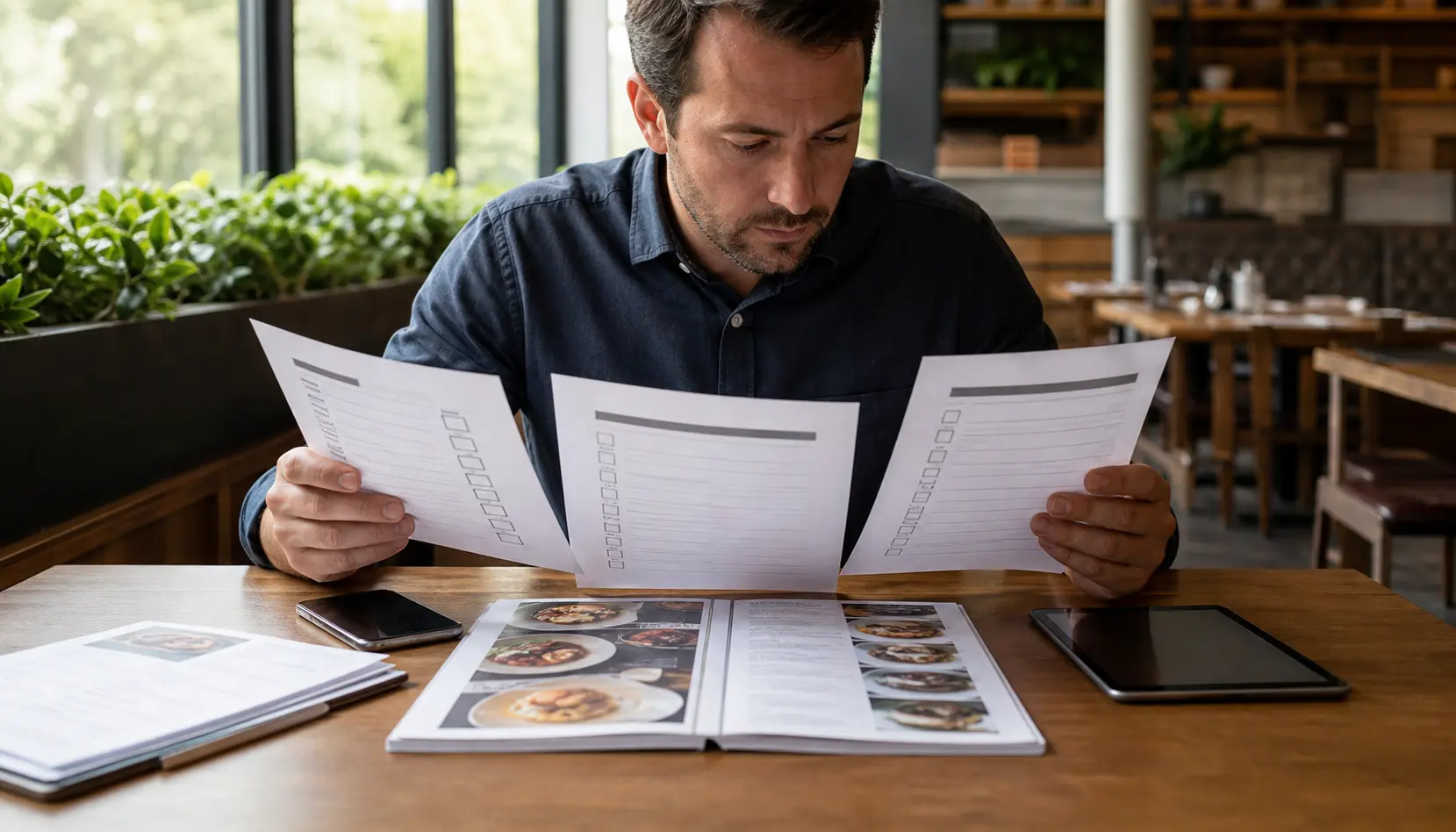
One of the biggest mistakes in multi location restaurant seo is publishing location pages that feel interchangeable. Searchers need fast answers: Is this the right store? What are the hours? Can I order? Is there parking? Does this location handle catering, reservations, or pickup differently?
Each location page should be built for that store, not for a corporate template alone. That means correct NAP details, a store-specific intro, the right ordering and reservation links, relevant photos, and internal links that guide the guest to the next step. If the page only swaps the city name, it usually will not support strong local conversion.
For Indiana-based growth work, these pages can also connect naturally to supporting service or location resources such as Indianapolis web design support when the local landing-page experience itself needs work.
Google Business Profile workflow for restaurant groups
Restaurant groups need a profile process that is light enough to keep and strict enough to protect accuracy. The goal is not to post every day. The goal is to stop the profile layer from drifting away from real operations.
A useful monthly workflow usually includes categories, hours, phone checks, menu and order-link checks, one photo review, one review-response check, and one offer or update review when needed. If the group has several managers, assign a clear local owner and one final reviewer so changes do not stall.
This is where many groups win back hidden demand. Guests who search close to me often decide from profile signals first. If the profile feels current and the landing page feels trustworthy, the store earns more calls, direction requests, and orders from the same search impression base.
Checklist: monthly local SEO review for each restaurant location
Use this checklist to keep the group moving with one operating rhythm.
- Confirm every location page has the right hours, phone, order path, reservation path, and service details.
- Check each Google Business Profile for category accuracy, holiday-hour changes, recent photo quality, and broken links.
- Review whether the top internal links still point to the right service, menu, catering, or reservation pages.
- Compare calls, direction requests, website clicks, and order-path visits by location instead of only at the group level.
- Fix one weak location page section and one weak profile detail for the worst-performing store before publishing something new.
- Log who approved the updates so the next month starts with less confusion.
This review pairs well with practical posts like restaurant hours and photo updates and restaurant website support because both topics protect the same conversion path.
Reporting should tie rankings to calls, directions, and order paths
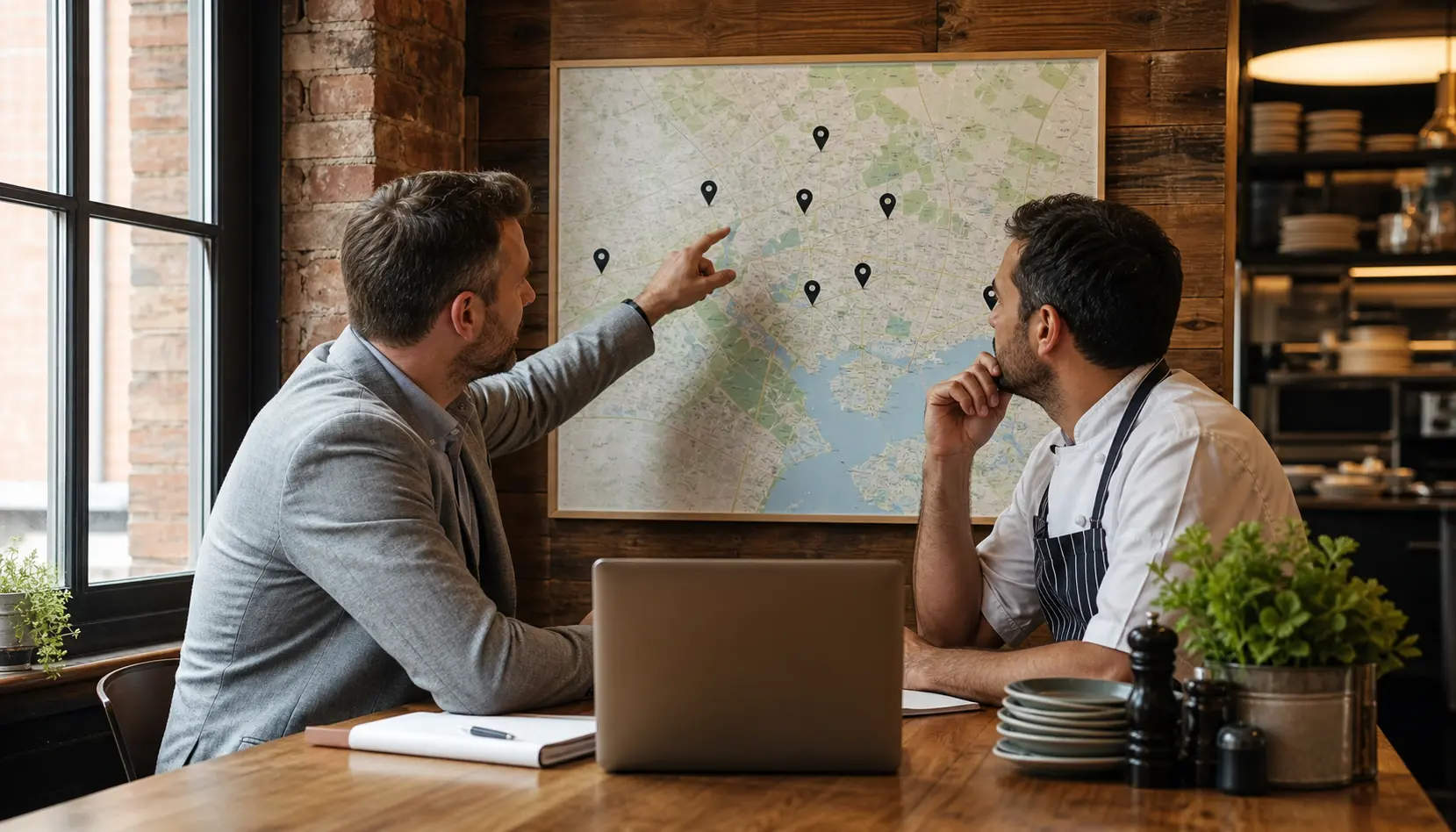
Multi-location reporting fails when it stays too high level. A group-level dashboard may look fine while one or two stores quietly lose local demand. That is why restaurant groups need reporting by location, not just by brand.
A useful monthly report should show rankings for core local terms, Google Business Profile actions, top landing pages, and conversion actions by store. If one location gets map visibility but weak calls, that often points to page friction or profile mismatch. If another gets strong calls but weak order clicks, the order path may be the problem.
When reporting is built this way, the owner can stop asking whether SEO is working in general and start asking which location deserves the next fix. That is a far better operating question.

How Sowynet supports local SEO for restaurant groups
Sowynet approaches restaurant groups as operating systems, not just map listings. We look at the profile layer, the page layer, the conversion layer, and the reporting layer together so the next fix is tied to the real source of friction.
That can mean tightening location pages, cleaning internal links, improving website support routines, or building a simpler monthly Google Business Profile workflow for each store. The goal is not to create more marketing busywork. The goal is to make local visibility easier to maintain and easier to turn into calls or orders.
If your group is growing across neighborhoods or cities, this kind of local structure protects the brand better than one-time cleanup ever will.
Internal linking plan
Support the next step with the right pages
This topic should move readers toward core service pages and nearby operational guides.
Clear next step
Need a cleaner local SEO system for several restaurant locations?
Sowynet can review the weak stores first, tighten the page and profile system, and set a monthly workflow that is easier for managers to keep.
Book a multi-location SEO reviewFrequently asked questions
Questions owners ask before they scale the system
These questions usually come up once a group realizes one store is stronger online than the others.
What is the first local SEO fix for a restaurant group?
Start with Google Business Profile accuracy, location-page basics, and the main call or order links for each store before adding more content.
Do multi-location restaurants need a separate page for each store?
Yes. Each store should have its own page with correct hours, phone, local context, and the right path to order, book, or call.
How often should a restaurant group review local SEO?
A monthly review is the practical minimum, with faster checks whenever hours, menus, or order links change.
What should reporting show for multi-location restaurant SEO?
Break down rankings, calls, direction requests, website clicks, and order-path actions by location so weak stores are easy to spot.
Can Sowynet handle both the fixes and the reporting?
Yes. We can support location pages, profile workflows, website support, and monthly reporting tied to real restaurant actions.
Quick summary
Short version for busy teams
Pain: one restaurant group can look uneven across maps, location pages, and order paths, so some stores quietly underperform. Fix: standardize location pages, Google Business Profile upkeep, internal links, and store-level reporting. Result: cleaner rankings, better calls, and stronger order paths across every location.
Related reading
Explore related guides and service pages
These links help connect store-level SEO, website support, and local conversion work.
Loading related resources...
Loading recent posts...